

Harvard GSD Design Discovery Virtual
2026 Program Handbook
Director’s Letter
Welcome to Design Discovery Virtual and the Harvard University Graduate School of Design (GSD)!
On behalf of our program team, we are excited to have you bring life to this program that we’ve been planning for the past year. It is your ideas and creativity that will make these weeks together enriching. This information packet is designed as a guide to Harvard GSD’s Design Discovery Virtual (DDV). Please take the time to read through all of the general information and program policies included here. Additional program details can also be found on our program website:
https://ede.gsd.harvard.edu/harvard-gsd-design-discovery-virtual/.
The next three weeks will be very lively and busy for everyone. If you need additional information, or help with something that is not covered here, please ask your studio instructor(s) or contact our program staff at [email protected].
Enjoy thinking through making and idea-sharing throughout Design Discovery Virtual. Work hard, but also enjoy yourself!
Executive Director of Early Design, Online, and Executive Education
Program Director, Design Discovery Virtual 2026

Handbook Contents
- Director’s Letter
- General Information
- Rules and Policies
- Conduct for Virtual Learning
- Teaching Team Bios
general information
2026 Program Dates
June 8 – June 26
Program Format
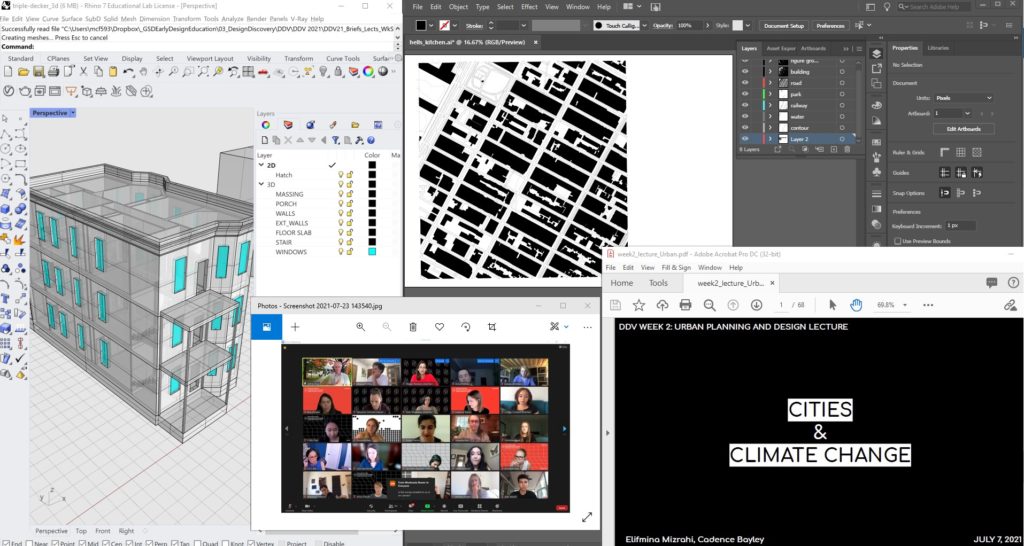
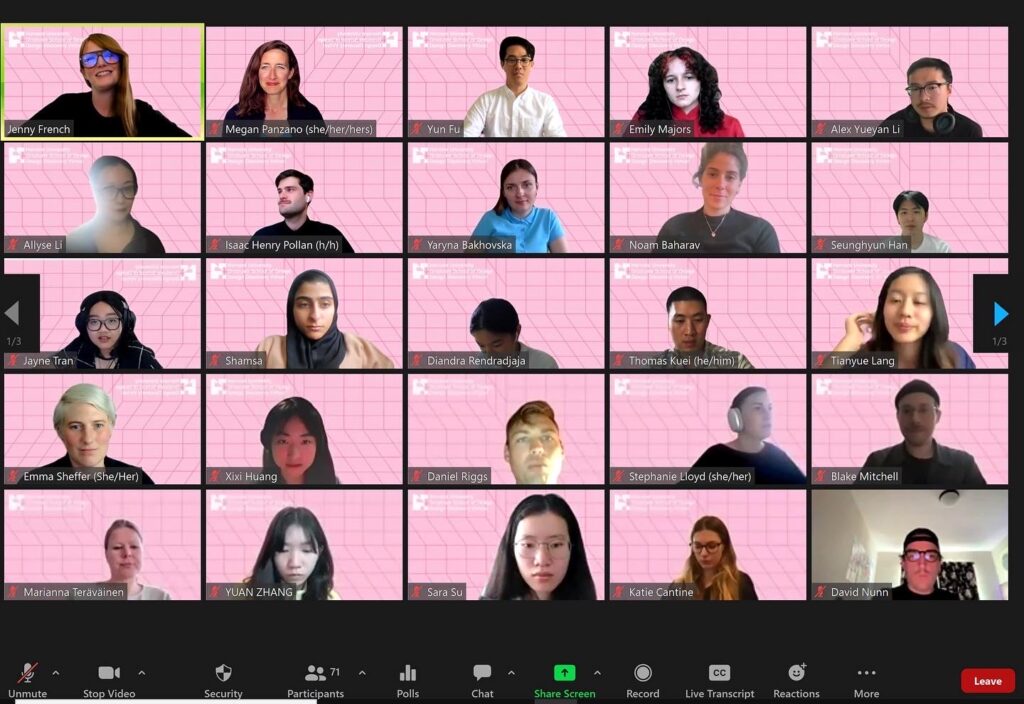
Design Discovery Virtual follows one schedule consisting of synchronous and asynchronous content. Synchronous blocks are taught live on Zoom and include tutorials, exercises, and studio work. You are required to attend synchronous sessions at the scheduled program time.
Asynchronous content is available on demand (pre-recorded tutorials and lectures. This includes time to prepare readings, assignments, and work on design projects outside of live instruction. You are free to complete asynchronous content when it best suits you, but we recommend that you set and follow your own schedule.
The content of the program includes lectures and discussions that tie the design fields to larger social concerns and to the roles they play in making a resilient, just, and beautiful world.
We aim to assign participants to design studios of no more than 10 people. Each studio is taught by instructors who guide their studio for the duration of the program. There will be opportunities to meet and share ideas with students in other studios.
Technical Requirements
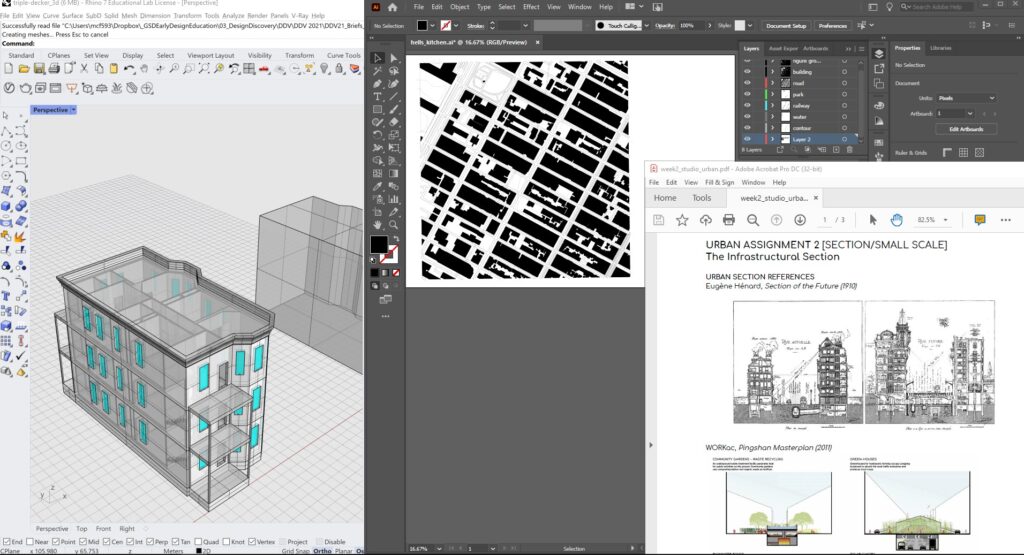
A device with a stable internet connection and sufficient resources to run Zoom and access the web-based Canvas course management software is required. Rhino 3D modeling software and Adobe Creative Cloud programs are also integral to the work you’ll do. Harvard will provide all participants with licenses to use these tools for the duration of the design program.
Certificates and Evaluation
A certificate from Harvard GSD along with a written evaluation from the instructor is issued at the end of the program to those who have successfully completed the requirements. To qualify, you must submit all required work and participate fully in program content. If you are in doubt about the requirements, please consult your instructor.
Program Leads
Megan Panzano, Program Director
Shaka Dendy, Program Coordinator
Coordinating Faculty
Slide Kelly, Landscape Architecture
Jenny French, Architecture
Yun Fu, Urban Planning & Design
rules and policies
Identification Number
Participants of Design Discovery Virtual are assigned unique identification numbers referred to as HUIDs. This ID, along with your Harvard Key, gives you access to Harvard-specific services. HUIDs are intended for university purposes only and cannot be used by any other person. Every student is
responsible for their HUID and is subject to disciplinary action in case of misuse.
If you encounter issues with your HUID access to digital media software during the program, please inform your instructor and share the issues you’re facing with Harvard GSD’s Helpdesk at [email protected].
Studio Assignments
Studio assignments are carefully structured and take into account factors such as background,
design experience, and geographic location. Participants may not switch studios during the program.
Absences
Participants are allowed up to three unexcused absences. If you exceed the three-absence policy due to an illness, please contact the GSD Early Design Education (EDE) Programs Office at [email protected] as soon as possible to discuss possible accommodations.
Policy on Nondiscrimination
In accordance with Harvard University policy, the Graduate School of Design does not discriminate against any person on the basis of race, color, sex, gender identity, sexual orientation, religion, creed, age, national origin, ancestry, veteran status, disability, genetic information, military service, or any other legally protected basis, in admission to, access to, or
employment in its programs and activities. Every effort will be made to ensure fairness and
consistency in the school’s relations with its students, faculty, and staff.
Policy on Sexual and Gender-Based Harassment
To view the entire policy on sexual and gender-based harassment, please visit the GSD’s Policy on Personal Conduct: https://www.gsd.harvard.edu/resources/personal-conduct/#titleix
Resources
GSD Title IX Coordinators for Students:
Kelly Wisnaskas: [email protected]
Laura DaRos: [email protected]
conduct for virtual learning
The Harvard GSD is excited to welcome you to our online program, Design Discovery Virtual. Our goal is to provide a diverse group of global individuals a safe and engaging learning environment. Harvard GSD and the Design Discovery Virtual Program reserve the right to remove a participant from the program in response to disruptive or disrespectful behavior.
Expectations
Participants are expected to treat online class meetings as if attending class/studio in-person and must refrain from any behaviors that disrupt class. Participants are expected to behave professionally, treating others with courtesy and respect on camera as well as during chat conversations. Profanity or socially offensive language is not tolerated.
A Note on AI Usage
Participants of this program will be developing design ideas through the use of program-provided digital media and software in order to communicate design intention and specific representations of the form and space of a developed three-dimensional design project in response to our program exercises and assignments. We recognize that AI tools are readily available, though these are not explicitly a part of our program’s digital tools. We encourage intentional authorship of design work in our program. We also expect honesty with where individual authorship lies in the development of design work. To this end, participants are asked to clearly communicate the use of AI, and their aims with its use, in the any of the design work (drawings, images or models) produced over the course of the program with their Design Instructor before including elements produced via AI tools in any presentation of their work to guests or outside design critics.
Online Presence
Our program is highly interactive. Participants are expected to attend all synchronous sessions, be on time, and come prepared to engage and contribute to the conversation. “Multi-tasking” during sessions can be disruptive and inhibit your ability to fully participate.
Please have your cameras on, unless discussed with instructors in advance. If not speaking, audio must be on mute. Appropriate clothing and surroundings are required.
For your safety, we ask participants to refrain from attending a session while driving or riding in a car. Participants are expected to join from a suitable, quiet location, with a device that
permits full participation in class activities.
Refrain from Photography & Recording
Participants may not take photos of the Zoom screen, record video or audio files, or post the same to social media. Your co-participants have a right to educational privacy and all content displayed in the classroom is the intellectual property of instructors and the Harvard GSD. If we plan to record a session, we will inform participants in accordance with University policy.
A Safe & Confidential Learning Space
Our virtual classrooms are safe spaces in which we encourage growth and personal reflection. We ask that you hold all conversations confidential to recognize the sensitivity of others’ comments, and we ask you to demonstrate respect for each individual’s dignity and capacity to contribute.
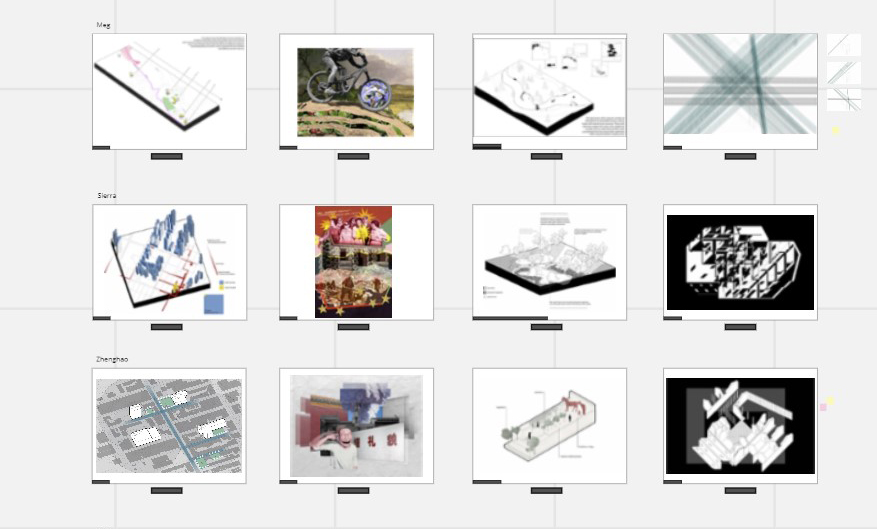
To see more examples of student design work and the life of this program, follow us @designdiscoveryharvardgsd on Instagram.
Teaching team Bios
Design Discovery Virtual sections are taught by graduating or advanced GSD students who have a concentration in the field they are teaching. Each section is coordinated by current Harvard GSD design faculty.
2026 Coordinating Faculty
Architecture
Urban Planning + Design
Landscape Architecture
Program Director
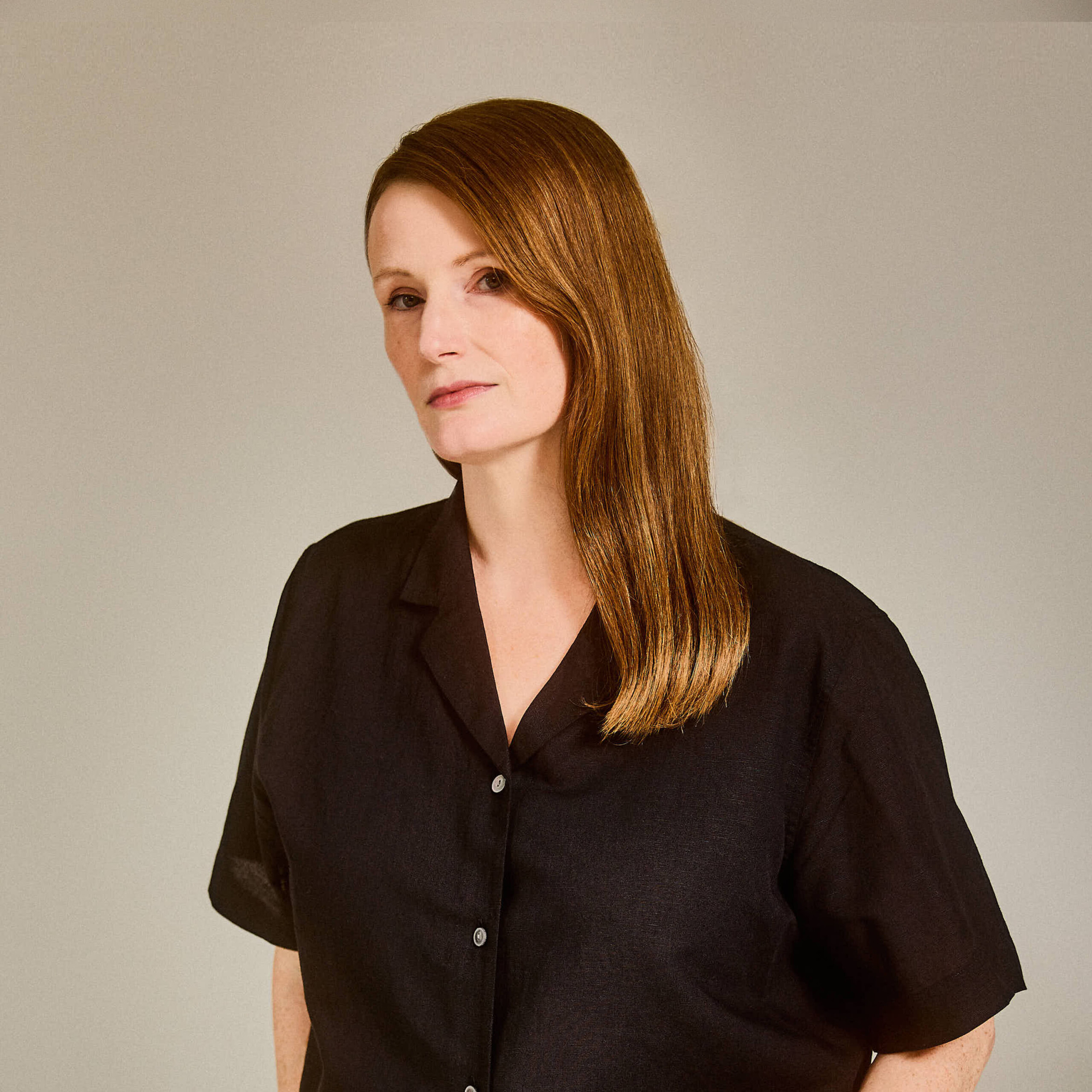


Megan Panzano
Lecturer in ArchitectureExecutive Director of Early Design, Online, and Executive EducationView Profile2026 Design Instructors
all-program TEACHING specialists
Aisha Iyengar, GSD MLA II
DDV All-Program Specialist + Super Instructor; Aisha Iyengar is an MLA candidate at Harvard University, pursuing a Master’s in Urban Planning and Design after earning her Bachelor of Landscape Architecture from the University of Georgia. She aims to integrate academic inquiry with professional practice, using design to critically engage social systems while advancing speculative futures for the southern United States and post-industrial landscapes.
Oskar Haushofer, GSD MArch I
DDV Technology Teaching Specialist + Super Instructor; Oskar is an M.Arch I candidate at the GSD, where his work focuses on multi-family housing. Before moving to the US, he worked at architecture offices in Berlin and Basel on the design of educational and institutional buildings. He holds a Bachelor of Science in Architecture from ETH Zurich. Outside of school, he fancies himself a long-distance runner, though the results suggest otherwise.
Emily Nguyen, GSD MArch I
DDV Program Teaching Assistant; Emily Nguyen is a Masters of Architecture I candidate at the Harvard Graduate School of Design with a Bachelor of Arts in Architecture and minors in Humanistic Studies and English from Princeton University. Her research investigates how we write about and understand architecture through the lens and lessons of the Academy. From this, the language and voices with which she speaks about architecture–in particular intimate or personal architectures–is multiplied and stitched between different disciplines and their methodologies. Her approach to architectural design is grounded in collage as a method for sketching and a generator of a formal and conceptual language.
studio instructors
Cayden Abu-Arja, GSD MArch I + MUP
Cayden Abu-Arja is an M.Arch and M.UP candidate at GSD, concentrating in International and Comparative Planning. She obtained a B.A. in Architectural Studies, a B.A. in Middle Eastern Studies, and a minor in Urban and Regional Studies from UCLA. Her cherishing the values of home and land and their vital relation to one’s personhood, livelihood, dignity, and memories, is what led her to pursue architecture and planning. Cayden has engaged in projects across the Middle East and the U.S, with a focus on culturally significant sites and urban resilience. She is interested in community-informed architectural design, policy-oriented urban development, and municipal planning processes.
Joseph Appiah, GSD MAUD
Joseph holds a Bachelor of Architecture from Cornell University (Class of 2022) and a Master of Architecture in Urban Design from Harvard GSD (Class of 2026). He is deeply interested in the intersection of resilient material innovation and global urban development. His background includes two years at Sekou Cooke Studio, where he gained extensive design and project management experience.
Dana Barale, GSD MDes Narratives
Dana Barale holds a Master in Design Studies from Harvard Graduate School of Design and completed her architectural training in Madrid, with additional studies at the University of Bath and Delft University of Technology. Her work operates at the intersection of architecture and media theory, examining narrative as a critical and speculative framework for contemporary cultural production.
Yona Chung, GSD DDes
Yona holds a Doctor of Design (DDes) and a Master of Architecture in Urban Design (MAUD) from the Harvard Graduate School of Design. Her research explores the space-time dynamics and reciprocity between cultural practices and the built environment, with particular focus on resilience and flexibility in today’s anthropocentric climate. She is the co-author of Design Thinking and Storytelling in Architecture (Birkhäuser, 2024) and has published in several peer-reviewed journals.
Jake Geitner, GSD MLA II
Jake Geitner is a landscape architecture student driven by regional design practices and community-based stewardship. He is committed to recovering marginalized histories of the American landscape, a pursuit closely aligned with his passion for photography. Prior to pursuing his graduate degree, Jake practiced for three years in Los Angeles—leading a design discovery program for students from traditionally underserved neighborhoods.
Amanda Lavond, GSD MLA I
Erica Martinez, GSD MLA AP
Erica Martinez is a Latin American architect pursuing a Master in Landscape Architecture at the Harvard Graduate School of Design. Grounded in professional practice, her work explores landscape architecture through the lenses of history and memory, and how they shape present and future decisions by integrating archival research and fieldwork with social, territorial, and ancestral knowledge.
Please visit our Design Discovery Virtual program webpage for more program information: https://ede.gsd.harvard.edu/harvard-gsd-design-discovery-virtual/
Follow Harvard GSD’s Design Discovery of Instagram, Facebook and LinkedIn for more information!