
Harvard GSD Design Discovery
2026 Program Handbook
Director’s Letter
Welcome to Design Discovery at the Harvard University Graduate School of Design (GSD)!
We are excited to have you bring life to this program that we’ve been planning for the past year. It is your ideas and creativity that will make these weeks together so enriching. This information packet is designed as a guide to Design Discovery (DD). Please take the time to read through all of the general information and program policies included here. Additional program details can also be found on our program website:
https://ede.gsd.harvard.edu/harvard-gsd-design-discovery/.
The next three weeks will be very lively and busy for everyone. If you need additional information, or help with something that is not covered here, please ask your studio instructor(s) or contact our program staff at [email protected].
Enjoy thinking through making and idea-sharing throughout Design Discovery. Work hard, talk to others, learn, and enjoy yourself!
Executive Director of Early Design, Online, and Executive Education
Harvard GSD Design Discovery 2026

Handbook Contents
general information
2026 Program Dates
July 13 – July 31
Gund Hall
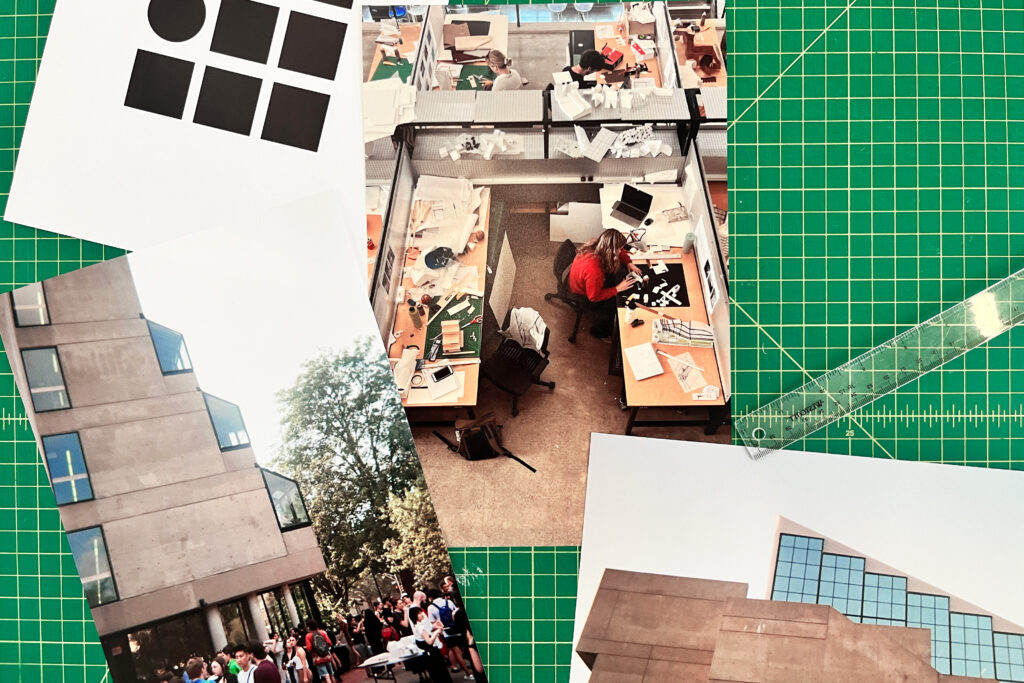
The Graduate School of Design (GSD) is housed in Gund Hall, and most of the activities of Design Discovery will take place here. The building was designed by Australian architect and GSD graduate John Andrews and was completed in 1972.
The central studio space, “the trays,” extends through five levels under a stepped, clear-span roof.
It admits natural light and provides views toward Boston.
Security & Building Hours
Your ID card provides access to Gund Hall throughout the program. Please bring it with you at all times. All students, instructors, and staff must vacate the building by 12 midnight; Monday through Friday and on weekends. A security guard is on call in the GSD Monday through Friday 5pm to 8am; Saturday and Sunday 24 hours; and holidays 24 hours.
Studio space is available:
M – F 8am – midnight
Sat – Sun 8am – 10:30pm
Please familiarize yourself with the location of fire exits and extinguishers. In case of fire, use the stairs, not the elevators.
It is inadvisable to leave anything lying around while you are away from your desk. Lock up belongings in your desk. Most studio desks have cabinets which will accommodate a standard 1/4” padlock. If you find that your desk cannot be locked, you may be able to share cabinets with another student or the program staff may be able to find you a locker elsewhere in the building.
Printing + Plotting in Design Discovery
Each participant’s Harvard ID will allow you to connect to the laser printers, black + white and color, throughout Gund Hall at Harvard’s Graduate School of Design. We strongly encourage students to print small tests in black + white to maximize this printing value over the course of our summer program. You may also present images of your design work digitally, using our school’s flat screen monitors. Your studio instructor will help you reserve a flat screen for this for interim and final design reviews.
Each participant has been given a $30 credit which you can use to print on any one of the laser jet printers located in and around the student desk space. Larger format plotting will be done by instructors. Although you are free to install laser jet printers on your own computer it is often easier to print from one of our release stations.
We have four release stations: two located in the center of the second floor and two located in the center of the third floor (see photo below). From the release stations, you can retrieve your document from email, cloud storage or a thumb drive and send it to any printer you wish (all of our printers are loaded on the releases stations). When you send a document to the printer you’ll be prompted to authenticate with your HarvardKey credentials.
For more information on printing; installing printers, finding printers, checking your transaction history, etc. or any other technology-related questions visit the Technology Guide
For Technical Help: [email protected]
OR VISIT Gund Hall L-19 / Hours: M-F from 9:00 AM – 5:00 PM for walk-in support
Building Noise
Cell phone use is allowed on the trays and in public areas. However, it is restricted during lectures and class time. As studio space may be tight, please be respectful of your neighbors when using your cell phone.
Please refrain from playing music at your studio desk without headphones.
Important Phone Numbers
Emergency
911
Police / Ambulance (HUPD)
617-495-1212
Poison Control Center
1-800-222-1222
Design Discovery Office
all contact info at: https://earlydesigneducation.gsd.harvard.edu/contact-us/
Frances Loeb Library
The Frances Loeb Library is open during the summer M-F from 10am – 5pm and the librarians are available for consultation. The full library is closed on Saturday and Sunday, though the first floor will remain open along with access to the Design Discovery program reference reserves there.
Harvard IDs allow access to the full array of Harvard Library electronic resources, including digital images, electronic journals, and reference sources. A book scanner, computer for library research, and printer are also available.
Online support during the program is also offered through our Ask a Design Librarian (http://asklib.gsd.harvard.edu/) service as well as online library research guides.
Lost and Found
Found articles are to be turned in to the Building Services Office or to the security guard at the ground floor reception desk during evening hours. Articles may be claimed from 9am to 5pm, Monday through Friday, at Building Services (Gund Hall, room L30).
Program format
Program Format
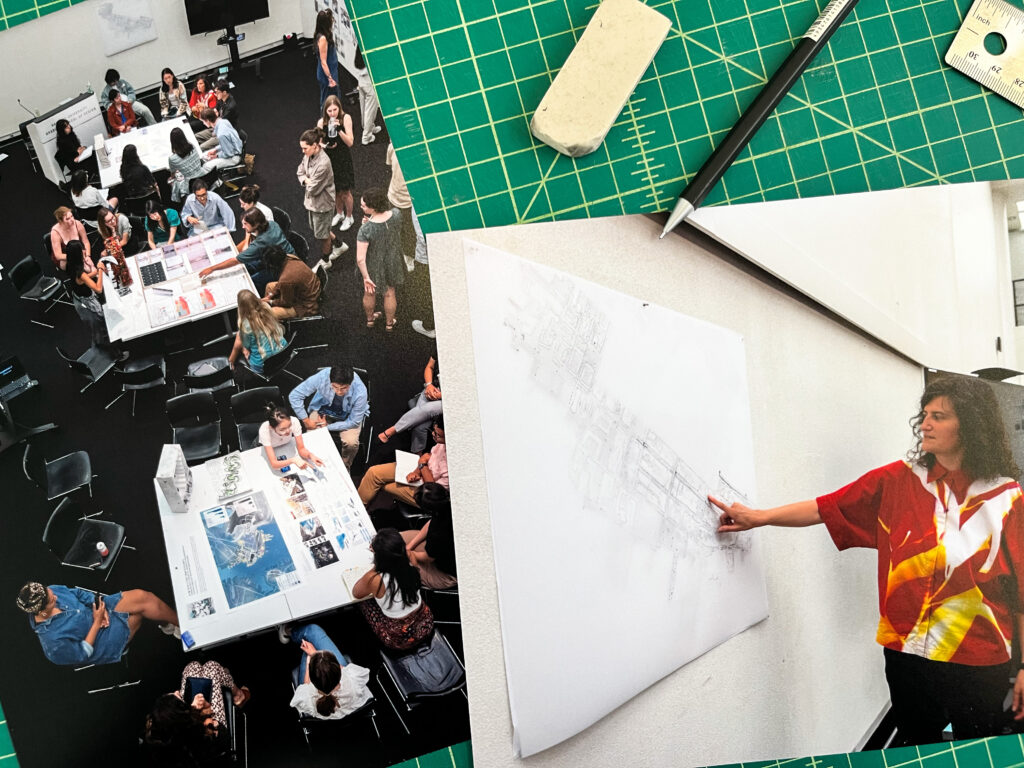
The Design Discovery Program runs from 10am to 6pm (or later) daily Monday through Friday. Most participants will also work in the building over the weekends during the program. The entire group meets in Piper Auditorium for morning all-program lectures and in the studios in the afternoon to work on design problems. In the evening, informal events, such as lectures and movies may be scheduled for all program participants.
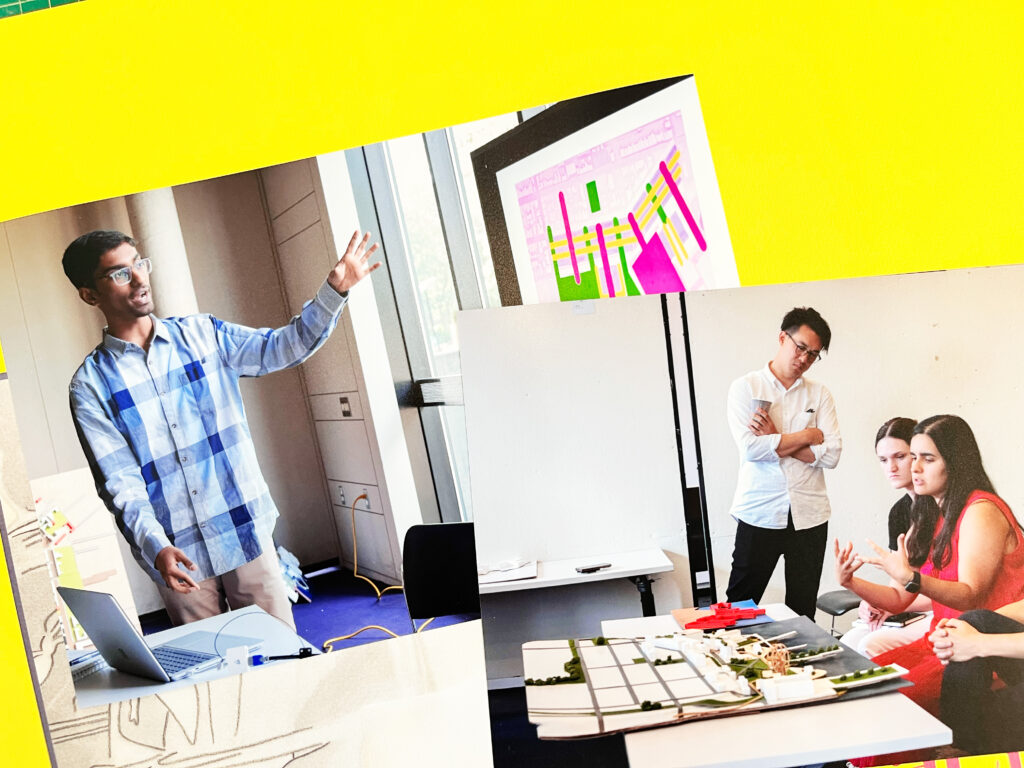
The program is divided into three divisions (architecture, landscape architecture, urban planning and design). These divisions are broken into studio sections of no more than 10 students. While changing selected concentration during the program is not possible, we strongly encourage you to talk to all program participants in the building during your time with our program.
Technical Requirements
A computer device with a stable internet connection and sufficient resources to run and access the web-based Canvas course management software is required. Rhino 3D modeling software and Adobe Creative Cloud programs are also integral to th work you’ll do. Harvard will provide all participants with licenses to use these tools for the duration of the program.
Certificates
Certificates of participation will be issued after the conclusion of the program. Students must turn in all required work to receive a certificate. If you are in doubt about the requirements, consult your instructor.
Schedule
Below is a sample schedule for the program. Most students work evenings and weekends in the studio.
| Monday | Tuesday | Wednesday | Thursday | Friday | Saturday + Sunday |
| 10:00-11:00am Lecture by design or planning professional | 10:00-11:00am Lecture by design or planning professional | 10:00-11:00am Lecture by design or planning professional | 10:00-11:00am Lecture by design or planning professional | 10:00-11:00am Work time in studio | Studios open during weekend |
| 11:15am-Noon Introduction to studio problem | 11:15am-Noon Design Seminar | 11:15am-Noon Making techniques wkshp | 11:15am-Noon Making techniques wkshp | 11:15am-Noon Making techniques wkshp | |
| Noon-1:00pm Lunch | Noon-1:00pm Lunch | Noon-1:00pm Lunch | Noon-1:00pm Lunch | Noon-1:00pm Lunch | |
| 1:00-6:00pm Review of studio problem | 1:00-6:00pm Studio | 1:00-6:00pm Studio | 1:00-6:00pm Studio | 1:00-6:00pm Studio | |
| Studios open until 12:00am | Studios open until 12:00am | Studios open until 12:00am | Studios open until 12:00am | Studios open until 12:00am |
Housing resources
Housing arrangements are the responsibility of each Design Discovery participant to make on their own. Design Discovery does not provide housing arrangements for our participants. Our program provides the following recommendations and resources to help individuals joining us make housing arrangements for the duration of our summer program.
- Location: You will be spending many nights in the studio. Be sure to take into consideration how far your rental is from the school and if transportation is easily accessible.
- Budget: Apartments in the Cambridge, MA area can be costly. Take into consideration what amenities you absolutely need and which ones you can live without.
- Roommates: Do you want to share a room with another person for the program?
Housing Resources
- UniSova University Housing & Marketplace
- Harvard Off-Campus Housing
- AirBnB
- ApartmentList
- Craigslist
- Padmapper
- Rent.com
- Sublet.com
- Massachusetts Tenant Rights, Laws, and Protections
Transportation
We strongly recommend arranging travel that does not include driving and parking your own car around Gund Hall during the program.
Shuttle Bus Service
617-495-0400 (weekdays only) For route information and schedule: www.transportation.harvard.edu/shuttle-van-services
The Shuttle Bus Service is designed to provide students and staff with safe, free, and convenient transportation throughout the Cambridge and Allston campus.
Evening Van Service
(fully accessible)
617-495-0400
The Evening Van Service (usually a white van with Harvard insignia) supplements the Shuttle Bus Service by operating as a taxi style service to locations off the Shuttle Bus route. All service is on demand and door-to-door within Cambridge and Allston (Porter Square to Central Square, Fresh Pond to North Harvard St and Western Ave). Rides are free and available between 7pm and midnight. Last call is at 11:30pm. Use a cell phone or the phone at the security desk in the lobby to schedule a pickup.
Daytime Van Services
(fully accessible)
617-495-0400
The Daytime Van Service is intended for persons who, because of permanent or temporary physical difficulties, cannot use the regular shuttle bus. Transportation is door-to-door within the Cambridge and Allston campuses. Transportation in the van is by appointment
only and free of charge. All riders must be authorized by the Design Discovery Program Administrator. Service times vary on weekends and holidays.
Car Services
Uber and Lyft operate in the Boston/Cambridge Area.
Harvard GSD’s Gund Hall is located at 48 Quincy St. Cambridge, MA 02138.
Mass Transit
Harvard Square is well serviced by both subway (T) and bus routes. The Red Line T provides quick (15-minute) transportation into downtown Boston. T tickets are $2.40 for a one-way fare with a Charlie Card, available from station agents at Harvard Square station. Bus tickets are $1.70 for a one-way fare with a Charlie Card or cash. Free public transportation maps are available at the Park St station (intersection of Red and Green lines). This valuable map shows detailed routes and telephone numbers for private bus and rail lines. There is also an online trip planner that can help you plan your route. For more information, refer to www.mbta.com.
Bicycles
Bluebikes
www.bluebikes.com
Sign up online for access to shared bicycles in Cambridge and Boston.
Bike Racks
Gund Hall provides several bike racks but be forewarned that the Cambridge St racks, while more carefully protected from bad weather, have proven to have the highest incidence of theft. The Quincy St racks are more visible and have substantially fewer thefts. For the best protection use a U-lock to secure the frame and front tire to any bike rack. Bicycles may not be brought into Gund Hall.
To help deter bicycle theft and to aid in identifying lost or stolen bicycles, students can register their bicycles for free with the Harvard Police at 1033 Mass Ave.
Driving/Parking
The Parking Office
Smith Campus Center, 8th Floor 617-496-7827
transportation.harvard.edu/parking
The Parking Office will provide you with a list of rules governing parking on University property and a list of permit types and fee schedules. Read the rules carefully; infractions can (and often do) result in fines, “booting” or towing. It is your responsibility to learn all state laws governing motor vehicle use.
Harvard University operates parking facilities on or near campus; these areas are patrolled by Harvard Police. Spaces can be rented for weekdays or weekends at separate fees. These may be purchased from the Campus Service Center on the 8th fl of the Smith Campus Center, or online at transportation.harvard.edu.
You cannot park on any residential streets with signs reading “Resident Permit Parking Only.” Car theft and vandalism do occur, so take precautions when parking your car. The University assumes no responsibility for damage to any vehicle or its contents regardless of cause.
Accessible parking is available by request. Please call the Program Administrator to make arrangements prior to your arrival.
Rules and policies
Student Conduct
As members of the Harvard Graduate School of Design community over the summer for this program, all program participants are expected to abide by the GSD Student Handbook regarding policies on personal and academic conduct.
This handbook can be found at this link: https://www.gsd.harvard.edu/student-affairs/student-handbook/
Additionally, participating in a Harvard program over the summer means that all participants should abide by the following policies: Campus Use, USSR, and NDAB policies
Contact Persons
Anyone who has reason to believe that a student has engaged in conduct that has violated the school’s policies on academic integrity, respect for others and their property, personal safety, or protests and demonstrations should report the matter to their instructor, Coordinating Faculty and/or the Program Director.
Identification Cards
Harvard University identification cards (IDs) are issued to students and staff at registration. ID cards must be carried at all times and serve as your entry pass to Gund Hall throughout the program.
This ID provides Design Discovery students with a pass to Harvard services. ID cards are not transferable; a student may not allow any other person to use their university ID for any purpose. If lost, please stop by Harvard University Campus Service Center at the Smith Campus Center, located at 1350 Mass Ave to order a replacement for $25.
ID cards are the property of Harvard University and are intended for university purposes only. Every student is responsible for their ID card and the circumstances of its misuse. A student who alters or falsifies their university ID, or produces or distributes false IDs of any kind, is subject to disciplinary action.
Absences
Students are allowed three absences. If you are ill, away from class, or out of town, please inform your instructor. It is helpful to know that your absence does not constitute an emergency. Local hospitals and Harvard University Health Services do not automatically inform us of any visits you make to them.
Pets
All animals, with the exception of service animals, are not allowed in Gund Hall.
Music
In order not to disturb others, we ask students to use headsets when listening to music or videos. Please cooperate if a classmate asks you to reduce the volume on your headset.
Cell Phones
Cell phones must be turned off during lectures, classes, in the library, and during pin-ups. Please keep your voice and ringer low (or on vibrate) when in the building or move to outside terraces or lobby for extended conversations.
Policy on Nondiscrimination
In accordance with Harvard University policy, the Graduate School of Design does not discriminate against any person on the basis of race, color, sex, gender identity, sexual orientation, religion, creed, age, national origin, ancestry, veteran status, disability, genetic information, military service, or any other legally protected basis, in admission to, access to, or employment in its programs and activities. Every effort will be made to ensure fairness and consistency in the school’s relations with its students, faculty and staff.
Policy on Sexual and Gender Based Harassment
The GSD has adopted the University-wide Sexual and Gender Based Harassment Policy.
To view the entire policy on sexual and gender-based harassment, please visit: https://www.hupd.harvard.edu/sexual-and-gender-based-harassment-policy
Contact – Title IX Coordinators for Students:
Kelly Wisnaskas
Title IX Coordinator for Students
[email protected]
617-495-5453
No-Smoking Policy
The no-smoking ordinance of Cambridge, Massachusetts, defines smoking as a hazard to public health and a public nuisance. It prohibits smoking in any public spaces in Cambridge, including classrooms, lecture halls, libraries, auditoriums, restrooms, work areas, lounges, and hallways. These regulations are in effect throughout the city, and, of course, throughout Harvard University and the GSD. All faculty, students and staff members are expected to comply fully with this no-smoking ordinance. Smoking is not permitted anywhere at the GSD. Under terms of the Cambridge ordinance, the GSD is responsible for policing all no-smoking areas within its buildings. Persons who smoke in no-smoking areas are in violation of this ordinance, which provides substantial individual and institutional penalties. Please advise all persons who are smoking inside GSD buildings of the regulations and request that they comply. If the smoker does not comply with the request, the affected person should give the smoker’s name to the Program Administrator.
Harvard University Police Department Clery Act Report
Harvard University Police Department Clery Act Report and the Harvard University Police Department are committed to assisting all members of the Harvard community in providing for their own safety and security. Harvard’s annual security report, prepared in compliance with the Jeanne Clery.
Disclosure of Campus Security Policy and Campus Crime Statistics Act (the “Clery Act”), is entitled “Playing It Safe,” and can be found on the HUPD’s website at https://www.hupd.harvard.edu/files/hupd/files/hupd_16_asr_102616. pdf. “Playing It Safe” includes information about the HUPD, how to report a crime, HUPD’s crime prevention programs, substance abuse, sensitive crimes, and other important information about security and HUPD services on campus. It also contains four years of statistics on reported campus or campus-related crimes.
Harvard University Police Dept
1033 Mass Ave, 6th floor
617-495-1212 (urgent)
617-495-1215 (business)
Harvard University
Harvard is a large and complex institution. Many of its facilities are available to Design Discovery students, and the most important of these are briefly described below. General information regarding Harvard University can be accessed at www.harvard.edu and on the GSD website at www. gsd.harvard.edu.
Athletics
Athletic facility passes may be purchased for a small fee with your HUID. For more see: https://membership.gocrimson.com/Membership/Index
Malkin Athletic Center
39 Holyoke St, Harvard Sq
617-495-2219
Located in Harvard Square behind Smith Campus Center, the MAC includes an indoor pool, cardio machines, and weight training areas.
Hemenway Gym
1515 Mass Ave
617-495-2222
Hemenway is a newly renovated gym on Harvard’s Campus, located closest to Gund Hall and the Law School. It includes squash courts, weight machines, and cardio equipment with cable TV, among other amenities.
Medical Services
During the program, your emergency health care needs can be met by either the Cambridge Hospital on Cambridge St, or Harvard University Health Services (HUHS) in Smith Campus Center during regular business hours and Pound Hall for after hours. If you require transportation to the Cambridge Hospital, call Harvard Police at 617-495-1212.
Cambridge Hospital
1493 Cambridge St
617-665-1000
There is a 24-hour emergency room. Outpatient costs are charged to you on a fee-for-service basis and based on the income of uninsured patients. Inpatient costs will be billed to
you or to your health insurance company. Insurance plans accepted here include: Blue Cross Blue Shield, Harvard Pilgrim Health Care, Tufts Health Plan, and many other plans.
Please note that students will be responsible for covering cost of care. International students should ensure that coverage policies extend to the U.S. Not all health insurance plans are accepted.
Harvard University Health Services
Smith Campus Center
617-495-5711
There is a clinic which operates during regular business hours and a 24-hour urgent care. Outpatient costs are charged to you on a fee-for-service basis. HUHS urgent care will not accept health insurance.
Additional Medical and Mental Health Resources for Participants
Behavioral Health Crisis Services (CBHC)
Psychiatric Emergency Services
Center for Suicide Research and Prevention at Massachusetts General Hospital
Suicide Prevention Crisis Hotline: 988 call or text Samaritans – Preventing Suicide, Providing Hope
Harvard Libraries
Fine Arts Library
Summer Hours
Mon-Fri 10am – 5pm
Sat-Sun Closed
The library’s entrance west of the science center in the Littauer Center. The stacks are in the basement floors. The collection focuses on the study of the arts, including the history of architecture. The Visual Collection department includes slides, prints, and drawings.
Houghton Library
Summer Hours
Mon + Fri 10am-5pm
Tue-Th 10am-7pm
Sat-Sun Closed
This library houses Harvard’s collection of rare books and manuscripts. It includes early printed books and writings on architecture as well as the H. H. Richardson drawings archive. It is located in Harvard Yard northeast of Harvard Sq facing Quincy St between Widener and Lamont libraries.
Widener Library
Summer Hours
Mon-Th 9am-10pm
Fr+Sat 9am-5pm
Sun 12-5pm
Approximately three million volumes on the social sciences and humanities. Widener is the hub of the university library system. As a Design Discovery student you may access the collection.
Rotch Library
Summer Hours
M – F 10am – 6pm
Sat – Sun Closed
(Architecture Building on Mass Ave at MIT).
MIT’s architecture and urban planning library is a useful resource for supplementing the material in the GSD’s Loeb Library.
Museums
www.harvard.edu/museums
Harvard houses several museums which are free to Harvard faculty, staff, and students with their ID card. Please take note of advance ticketing requirements and summer hours on particular museum sites.
Art Museums
Harvard Art Museums
Carpenter Center for the Visual Arts
metaLAB
Science + History Museums
Harvard Museum of Natural History
Collection of Historical Scientific Instruments
Peabody Museum of Archeology + Ethnology
Harvard Museum of the Ancient Near East
Warren Anatomical Museum
Living Collections
Arnold Arboretum
Harvard Forest
Harvard Cultural Events
During the summer at Harvard, a great variety of musical, theatrical, film, and other cultural events occur, either free or at modest prices. For more information, consult the Harvard Summer School site:
https://summer.harvard.edu/academic-opportunities-support/campus-life/activities-athletics-museums/
An interactive map of the Harvard campus can be found at
map.harvard.edu
local services
Food and Beverages
Inside Gund Hall
Microwaves on second, third, fourth, and fifth floors. Vending machines located in the ground floor “Chauhaus” cafe space and second floor kitchen.
Surrounding the GSD
Clover
Harvard Science Center
1326 Massachusetts Ave.
Gourmet vegetarian pita sandwiches with creative ingredients.
Broadway Marketplace
468 Broadway
617-547-2334
Good but pricey produce and groceries, bakery, deli counter, and hot food/salad bars. Attached to Starbucks. Show your Harvard ID for discounts on weekends.
Food Truck on Oxford St
Midday, across from the Museum of Natural History. Cheap and plentiful Chinese food for lunch.
Food Trucks on Harvard Plaza
Check the schedule at commonspaces.harvard.edu/food-truck-schedule. Includes a regular rotation of Vietnamese, vegetarian, chicken and rice, and seafood trucks.
Smith Campus Center
1350 Massachusetts, Ave
Tons of great eats
Harvard Square has many diverse meal options as well!
Can’t Get Around?
Dining delivered to your door from virtually any restaurant in the Cambridge/Somerville area. Check out the following websites for participating restaurants and menus.
Doordash.com
Grubhub.com
UberEats.com
Mail
Harvard mail policy prohibits students from receiving mail at the Harvard Graduate School of Design. If mailing resources are required during your time with our program, we recommend using FedEx (www.fedex.com) or the U.S. Postal Service.
Printing and Copying Outside of Gund Hall
There are scanners in the trays of Gund Hall as well as in the lower level of Loeb Library. Printers (8.5×11 and 11×17) are distributed throughout the building. Large format plotters are also available in the building, with the help of your studio instructor.
If your production needs go beyond this this summer, here are other options surrounding the GSD:
Art, Drafting, Hardware and Wood Supplies
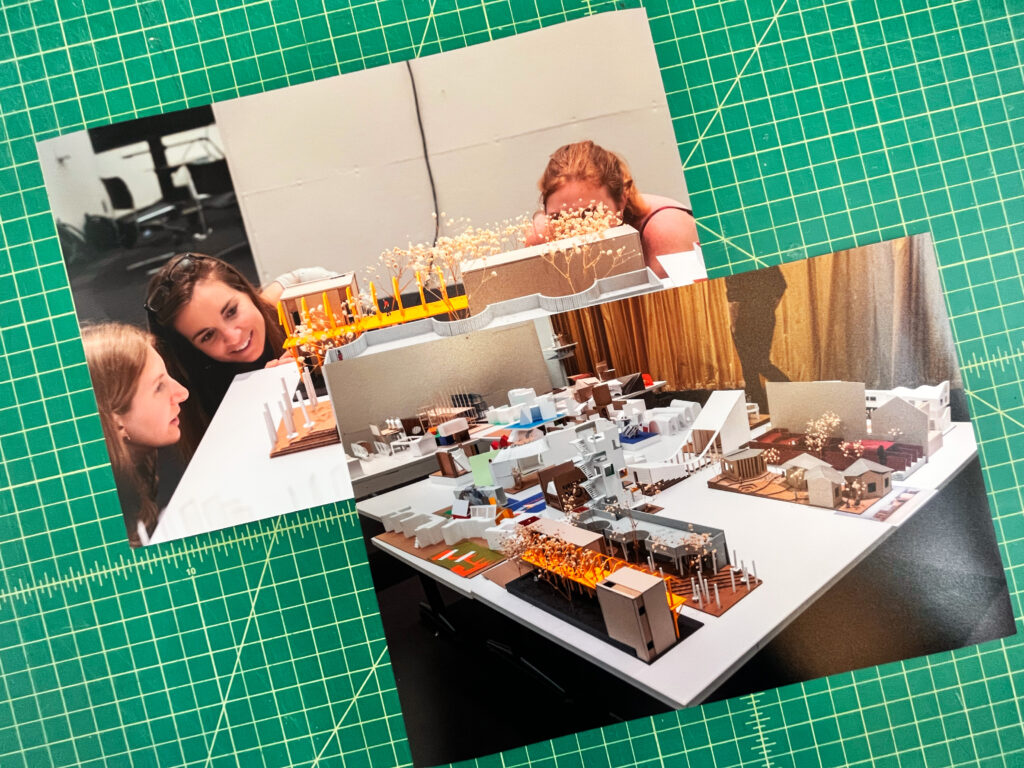
We have an in-house Lab Store for additional modeling and design supplies inside Gund Hall. Please see the summer hours and inventory of items for purchase at this link for our GSD store here:
For additional hardware store, lumber yard, art and craft stores supply tools, materials, and inspiration, we’ve created a map of additional stores where you might purchase supplies within proximity to Gund Hall, Harvard’s Graduate School of Design in Cambridge, MA.
Please check out our making supplies resource map here: Harvard GSD DD Making Supplies Map
Cambridge + Boston
The greater Boston area is one of the richest areas in North America in terms of environmental design. Three weeks will not be nearly enough to see even the most important works of architecture, urban planning and design. Furthermore, you will find an extraordinary range of cultural events and opportunities for recreation.
Here are just a few things you might want to have on your radar during the Design Discovery program:
Museums
Museums abound in Boston. Among the most popular are:
Museum of Fine Arts
465 Huntington Ave, Boston
(Museum T Stop-Green E line)
617-267-9300
This is the largest museum in Boston and has an extensive calendar of events every month, many of them free of charge.
Museum of Science
1 Science Park, Boston
(Science Park Station stop on the Lechmere-bound Green E line) 617-723-2500
Isabella Stewart Gardner Museum 25 Evans Way, Boston
(Museum T stop, green E line)
617-566-1401
Institute of Contemporary Art
100 Northern Ave, Boston
617-478-3100
The ICA is a waterfront museum designed by Diller Scofidio + Renfro.
There are more places than we can list, but a few others that may be of special interest:
• The New England Aquarium
• Boston Duck Tours
• Boston National Historical Park
• Boston Public Library
• Old State House Museum
• Paul Revere House
• USS Constitution Museum
Boats
Boston Harbor has several islands which are good for a picnic, exploring, or just escaping. The boat taxis leave from Long Wharf-North. In addition, you can rent anything from a yacht to a row boat, depending on your funds and ambition.
If you are interested in concerts, dance, or theatrical performances, check calendar.boston.com.
In and around Boston
There are also many possible excursions both in and outside of Boston. A few of the most popular destinations are:
By T:
• JFK Memorial Library, Dorchester
• Arnold Arboretum, Jamaica Plain
• Prudential Skywalk, Boston
• Swan Boat Rides, Boston
• Public Garden, Boston
• Mt. Auburn Cemetery, Watertown
• Fenway, Boston Park
By car:
Concord/Lincoln, MA:
• DeCordova Museum
• Old North Bridge
• Minuteman National Historic Park
• Walden Pond
• Gropius House
Teaching team bios
Design Discovery sections are taught by graduating or advanced GSD students who have a professional and academic specialty in the design discipline they are teaching. Sections strive for a maximum of ten students per instructor. Each section is coordinated by current GSD faculty.
2026 Coordinating Faculty
Architecture
Urban Planning + Design
Landscape Architecture
Program Director

Megan Panzano
Lecturer in ArchitectureExecutive Director of Early Design, Online, and Executive EducationView Profile2026 Design Instructors
fabrication specialist
Rahul Subramanian, GSD MArch I
Lead Fabrication Specialist + Super Instructor; Rahul Subramanian is a Master of Architecture I (MArch I) candidate at the Harvard Graduate School of Design and holds a Bachelor of Science in Architecture (B.S. Arch) from the Georgia Institute of Technology. He has previously worked at offices in New York City and Chicago, where he is originally from. His interests lie in testing various forms of storytelling as it relates to making and mentorship, centering documentation and dialogue. Check out his work at rsub.myportfolio.com
architecture
Hugo Betting, GSD / GSAS PhD
Hugo is a 5th-year PhD candidate, working at the nexus of architectural, intellectual, and environmental history. Prior to attending Harvard, Hugo was trained as an architect at the ENSA Paris La Villette (B.Arch, M.Arch, Licensure) and worked in various architecture studios in Paris. More recently, he has taught architectural history and theory at Wellesley College and the Rhode Island School of Design.
Anisa Shafiyya (Fia) Harnantyari, GSD MArch I
Fia is an architectural designer whose work explores the relationship between architecture, the public, and the city. Trained in both architecture and engineering, she holds a Master of Architecture from the Harvard Graduate School of Design and a Bachelor of Engineering in Civil and Environmental Engineering from Waseda University. Having lived and worked across Indonesia, Japan, Qatar, France, and the United States, she brings a global perspective to questions of urban form and collective life.
Maggie Kroenig, GSD MArch II
Maggie Kroening is a designer interested in how architecture resonates with the public through form, context, and experience. She recently completed her MArch II at Harvard GSD as a Dean’s Merit Scholar. Previously, she studied at NC State, receiving the AIA Medal and national recognition across disciplines.
Katie Ladd, GSD MArch I
Katie is a designer and researcher pursuing a Master of Architecture I degree at Harvard GSD. She also holds a Bachelor of Fine Arts with a concentration in graphic design from the University of Florida. She has worked in architecture offices in Berlin, Mexico City, New York City, and Los Angeles. Her work has been exhibited in the Frances Loeb Library, published in Pairs Journal, and purchased by the University of Florida Special Collections Library. She is particularly interested in archives, adaptive reuse, and material narratives.
Ella Larkin, GSD MArch II
Ella Larkin is a recent graduate from the Graduate school of design, where she was a candidate in the Masters of Architecture II Program. She is heavily interested in design as it relates to context and how experience is shaped by the response to conditions pertaining to the site conditions. As well as, how can narrative be leverged within the design process to add depth. She has previously interned for Kevin Stevens, Marlon Blackwell Architects, Gensler, and worked as a fablab employee at both the GSD and University of Tennessee. Ella is a graduate from the University of Tennessee – Bachelors of architecture program where her thesis project “Fulfillment as the Frontier” was awarded Faculty Award for Design Excellence and honorable mention for distinguished design award. Work can be seen at https://a-cache.cargo.site.
Renzo Marsino Moreno, GSD MDes Narratives
Renzo Marsino Moreno holds a Master’s in Design Studies in Narratives from Harvard GSD and a Bachelor’s and MArch from Pontificia Universidad Católica de Chile. Bridging research, teaching, storytelling, and built projects, he focuses on public infrastructure at MIT and desert environments in Chile and Peru, cultivating an international practice across Latin America, the US, and China, with prior professional experience at Elemental and ZAO/standardarchitecture.
Livia Miller, GSD MArch I
Livia Miller (they/them/theirs) is an MArch I candidate at the GSD. They graduated with honors from the University of Chicago with BAs in Anthropology and Visual Arts. They have worked on residential, commercial, and exhibition design projects with offices in Boston, Chicago, and New York and have published research in e-flux. Livia is interested in deep time, speculative formalism, and materiality.
Daniela Morin, GSD MArch II
Daniela Morin is a Master of Architecture II candidate at the Harvard Graduate School of Design, following the completion of her Bachelor of Architecture at Universidad Iberoamericana in Mexico City. She previously worked for two years as a Junior Designer at Bjarke Ingels Group in New York, where she contributed to a wide range of projects across scales, including 3D-printed housing, academic campuses, and adaptive reuse developments. Her work is driven by a deep interest in contextual and vernacular architecture, recognizing their critical role in shaping well-oriented, culturally responsive, and socially responsive design solutions.
Chuchu Qi, GSD MArch I + MDes Publics
Chuchu Qi is a MArch I and MDes(Publics Domain) candidate at the Harvard GSD. She received her B.S. in Architecture from Washington University in St. Louis, with minors in Anthropology and Landscape Architecture. She has worked in architecture offices in New York, Tokyo and Beijing. Chuchu investigates how emerging spaces shape interactive experiences and foster new modes of collective life, with projects ranging from adaptive reuse proposals to socially engaged domestic infrastructures that reframe everyday rituals and cultural memory.
Joe Russell, GSD MArch I
Joe is currently a MArch I Candidate at Harvard University and studied his undergraduate degree at The Bartlett School of Architecture, UCL. Prior to attending the GSD, he worked full-time as an architectural designer at RSHP (Richard Rogers Partnership) in London, UK. He has interned at Adjaye Associates, SOM, LexisNexis, and HDR as a Design Scholar. You can check out some of his student work at www.joerussellarchitecture.com which includes undergraduate and graduate projects!
Rebecca Schalip, GSD MArch I + MLA I AP
Rebecca is a designer and researcher interested in reciprocal relationships between architecture and landscape. Her studies on metabolic material cycles and fostering playful interactions between people and their built and natural environment lead to investigations at both the human and territorial scales of design. She holds an MArch I and MLA I, AP from Harvard GSD, and a Bachelor of Science in Architecture from the Ohio State University.
Ann Tanaka, GSD MArch I
Ann holds an MArch I from Harvard GSD and a B.S. in Engineering with an Architectural Design concentration, with minors in Art History and East Asian Studies, from Stanford University. She has worked across scales and typologies in practices based in New York, Los Angeles, San Francisco, and Tokyo. She is currently applying her thesis research on climate adaptation at the wildland-urban interface to her hometown of Los Angeles.
Landscape Architecture
Caroline Brodeur, GSD MLA I AP/MUP
Caroline Brodeur is a Canadian designer and researcher pursuing concurrent masters degrees in Landscape Architecture and Urban Planning at the Harvard Graduate School of Design. Her work explores the role of environmental history, policy, and law in shaping climate adaptation. Caroline holds a degree in architecture with distinction from the University of Waterloo. Prior to graduate school, she worked on nature-based infrastructure design and resilience planning as a designer at SCAPE Studio in New York and New Orleans, as well as architecture firms in London and Paris.
Jeremy Dvorak, GSD MLA II
A self-described champion of landscape architecture as a liberal art, Jeremy focuses on landscape’s subjectivity, grounding performative design with artistic practice. Currently he studies art as a fieldwork method that privileges embodiment, everyday place, and intentional dwelling. His passions, running and painting, led to his academic interests. Jeremy hopes to pursue a career in practice and academia.
Miriam Hernandez Medina, GSD MLA I
Miriam is a registered architect in Mexico with diverse experience at Tatiana Bilbao Estudio and Álvarez Tello in Mexico City, as well as recent work at Michael Van Valkenburgh Associates. Her research and MLA thesis investigate the Rio Bravo, where design, ecology, and politics converge at the U.S.-Mexico border. She brings curiosity and an engaged, exploratory approach to teaching design.
Aisha Iyengar, GSD MLA II
Aisha Iyengar is an MLA candidate at Harvard University, pursuing a Master’s in Urban Planning and Design after earning her Bachelor of Landscape Architecture from the University of Georgia. She aims to integrate academic inquiry with professional practice, using design to critically engage social systems while advancing speculative futures for the southern United States and post-industrial landscapes.
Oliver Oglesby, GSD MLA I AP / MUP
Oliver is a designer, planner, and researcher from Denver, Colorado. Prior to Harvard GSD, he worked as a senior designer and project manager with Michael Van Valkenburgh Associates in New York, Gehl in San Francisco, AWP in Paris, and as a Harvard Bloomberg City Leadership Initiative Summer Fellow with the City of Hobart, Australia. Coming from a visual arts background, he received a BA in geography, architecture, and environmental studies from Vermont’s Middlebury College.
urban planning + design
Yona Chung, GSD DDes
Yona holds a Doctor of Design (DDes) and a Master of Architecture in Urban Design (MAUD) from the Harvard Graduate School of Design. Her research explores the space-time dynamics and reciprocity between cultural practices and the built environment, with particular focus on resilience and flexibility in today’s anthropocentric climate. She is the co-author of Design Thinking and Storytelling in Architecture (Birkhäuser, 2024) and has published in several peer-reviewed journals.
Enrique Lozano, GSD MAUD
Enrique grew up in Southwest Texas along the U.S. Mexico border, where he developed an interest in urbanism shaped by political and cultural ecologies. He holds a Bachelor of Architecture from the University of Houston. Before joining the GSD, he worked at EMBT in Barcelona, Lake Flato in Austin, and SWA in Los Angeles. His research examines water, territory, infrastructure, and environmental justice.
Erin Park, GSD MAUD
Erin Sung Park is a Master of Urban Design (MAUD) candidate at the Harvard Graduate School of Design, following her Bachelor of Architecture from Yeungnam University. Prior to graduate school, she worked at STA Architects in South Korea, contributing to award-winning cultural and residential projects through design visualization and development. Her work explores urban design through spatial representation, public space, and infrastructure, with a focus on communicating complex urban conditions through design.
Alessandro Ricciardi, GSD MAUD
Alessandro is a Master of Architecture in Urban Design candidate at the Harvard GSD. After receiving his degrees from Northeastern University, he spent four years as an architectural / urban designer at Utile, where he worked on projects ranging from comprehensive city plans to community centers. After graduating, he intends to split his time between practice, research, and teaching.
Savalee Tikle, GSD MAUD
Savalee is an architect, urbanist, and researcher from Mumbai whose work advances urban innovation through equity and resilient planning. As a Harvard Bloomberg Summer Fellow with the City Leadership Initiative in Indiana, she developed the city’s first GIS-based blight and vacancy database, shaping a replicable revitalization strategy that reframed underutilized land as an opportunity for housing and public life. Her experience spans collaborations with Perkins Eastman Architects across Asia, Middle East, and the U.S., SEArch Design Studio, and grassroots partners. She works across design, policy, and data to build resilient, community-centered urban futures.
follow Harvard GSD Design Discovery on Instagram, Facebook and LinkedIn for more information!