

Harvard GSD Design Discovery Virtual
Study three disciplines in three weeks, from anywhere in the world. Develop your digital media skills while exploring the myriad ways design can address a series of contemporary issues. Must be 18 or older to participate. No visa necessary–U.S. and international citizens welcome.
Overview
Design Discovery Virtual (DDV) is a three-week virtual academic program that engages a global audience interested in an introduction to design, media and methods across the three disciplines of Architecture, Landscape, and Urban Planning + Design. Must be at least 18 with a high school diploma or equivalent. U.S. and international citizens are invited to apply.
The program explores the potential of design to address a series of contemporary issues within the built environment. Program participants benefit from a collaborative, cross-disciplinary lens on the development of design responses to weekly topics through visual communication with an emphasis on digital media for design drawing and modeling. Participants are also exposed to the wide range of perspectives about the built environment that this program’s global audience offers.
Design Discovery Virtual can be taken before Design Discovery in the same summer, or subsequent years. DDV is not a virtual copy of the in-person program, and is, instead, distinctly formatted as a survey of three design disciplines–one per week–intended to give participants a broad perspective on how they overlap with, relate to, and differ from one another. Graduates of Design Discovery Virtual benefit from this horizontal perspective and may choose to enroll in Design Discovery with a better understanding of which discipline they wish to study in more depth.
This program is taught by a diverse group of Harvard Graduate School of Design (GSD) faculty, masters, and doctoral degree program graduates, and includes interaction with a broad network of design talent invited as guest lecturers and critics for the program. Successful participants receive a program certificate, student evaluation, and produce a draft portfolio of design work that can be shared with design program admission committees, potential design employers, collaborators, clients, or school programs for course credit consideration.
Program Summary
- Three weeks, live, from anywhere in the world. No visas or relocation.
- Audience ages 18 and up. No design experience required.
- All three disciplines–Architecture, Landscape Architecture, and Urban Planning + Design–one week each.
- A physical design kit mailed to you, wherever you are. Adobe Creative Cloud and Rhino 3D modeling software included.
- Taught by Harvard GSD faculty and advanced GSD master’s students & doctoral candidates. Maximum of 10 participants per instructor.
- Earn a Harvard GSD Design Certificate, leave with written evaluation and work portfolio.
APPLICATIONS FOR DESIGN DISCOVERY VIRTUAL 2027 WILL BE AVAILABLE IN JANUARY. CHECK BACK FOR UPDATES IN THE NEW YEAR.
Who Attends DDV
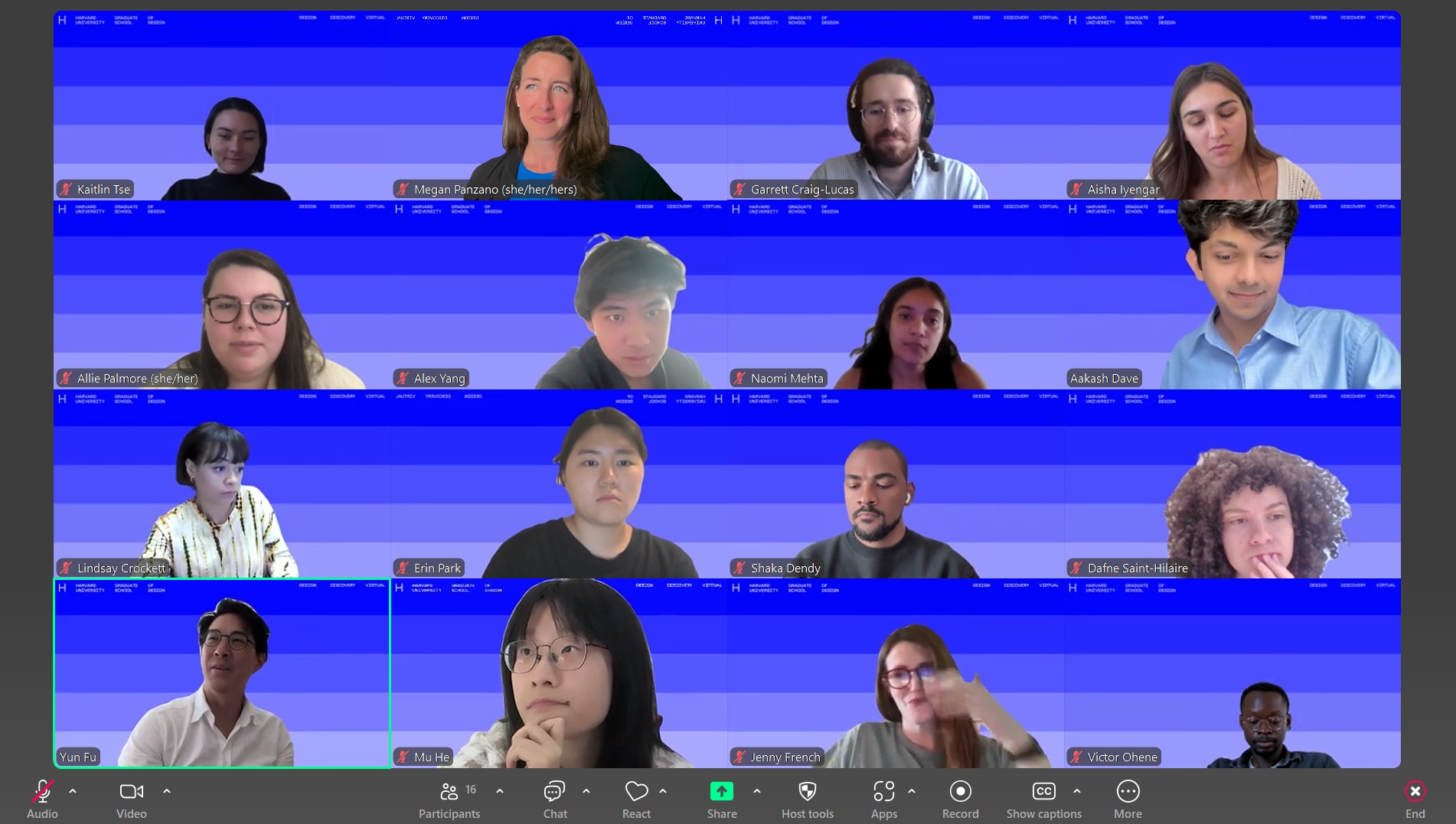
Open audience. Open outcome. Design Discovery Virtual students come from a wide range of cultural backgrounds, geographic locations, ages, lifestyles, and training (most have little to no previous design experience). This makes the virtual format an especially rich and stimulating design learning environment.
Many participants are college students or recent graduates, but the program is also helpful to professionals in their thirties, forties, or beyond who are interested in learning about design to inform their current work, are considering a career change, or who simply want to learn more about the built environment and design thinking.
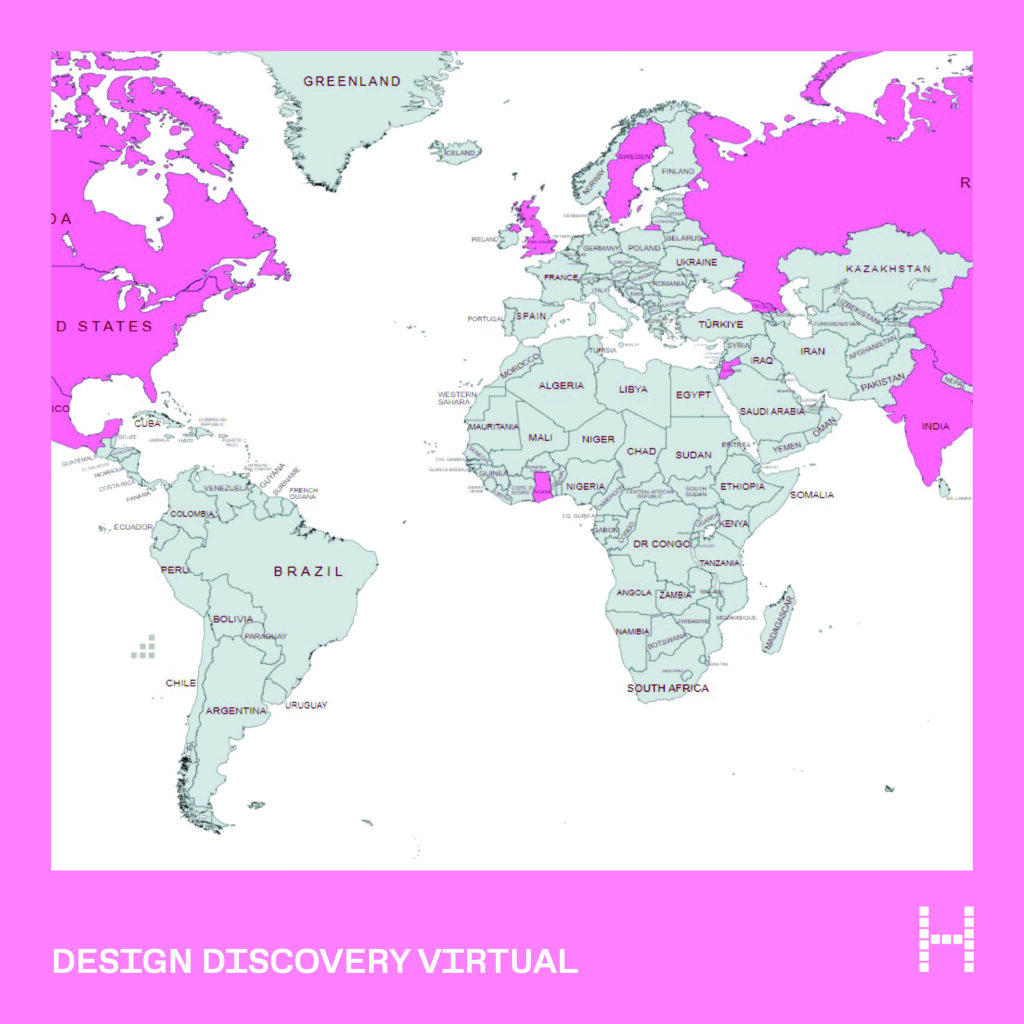
We host an average of 225 participants per year. In our recent program cycle, participants from 19 different countries and 33 U.S. states joined us to discover design, bringing with them backgrounds in anthropology, international affairs, marine science, nutrition, public policy, entrepreneurship, and more.
lIFE OF THE PROGRAM

Learning Format
Program Format
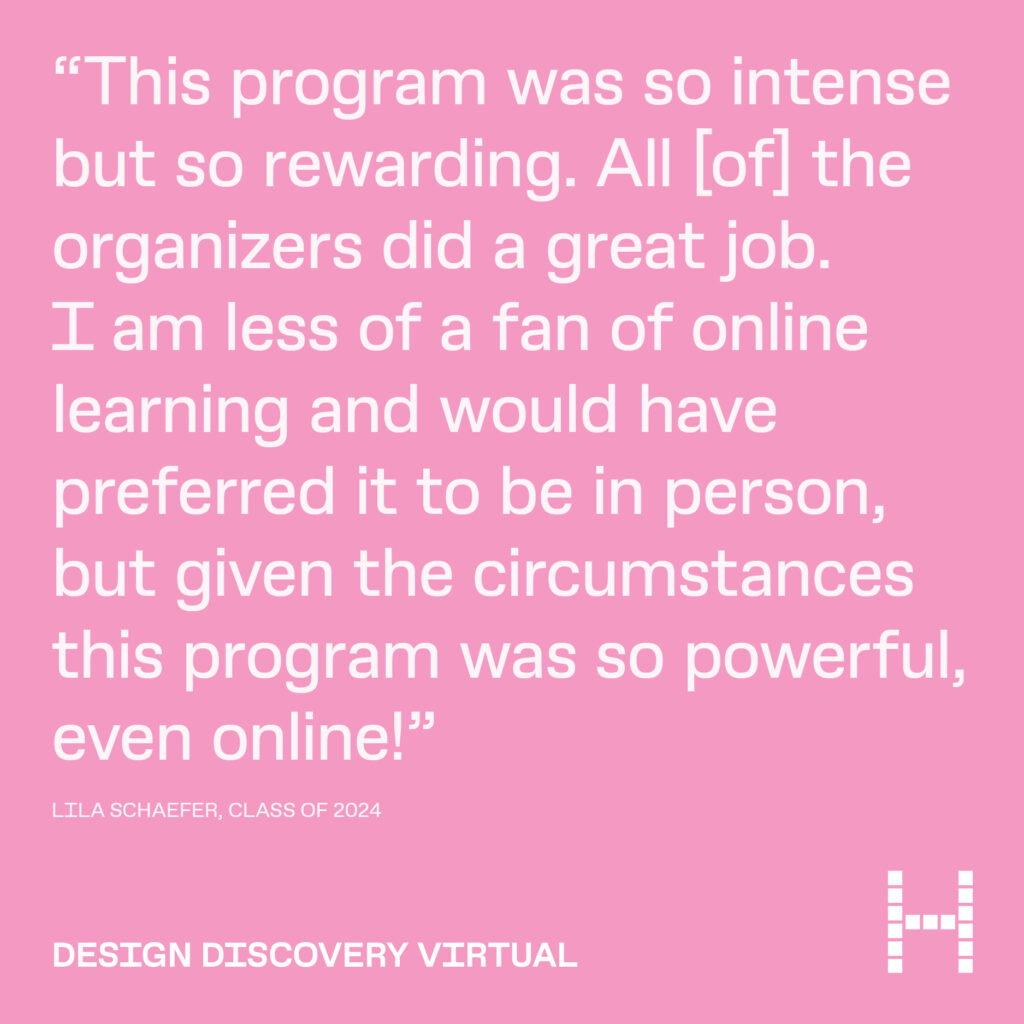
Participants in our program commit themselves fully to a path of intensive studio work, lectures, and design technique workshops within the virtual format of the program. Immersed in a culture that is both challenging and rewarding, they experience what education and work are like across the disciplines of Architecture, Landscape Architecture and Urban Planning + Urban Design. The cross-disciplinary approach of the Design Discovery Virtual program reveals areas of similarity and difference among these three design disciplines. Participants emerge — often inspired and exhilarated — with a more profound understanding of the impact of design on the global built environment and what possibilities for further design study and practice exist that better informs the choice they will make.
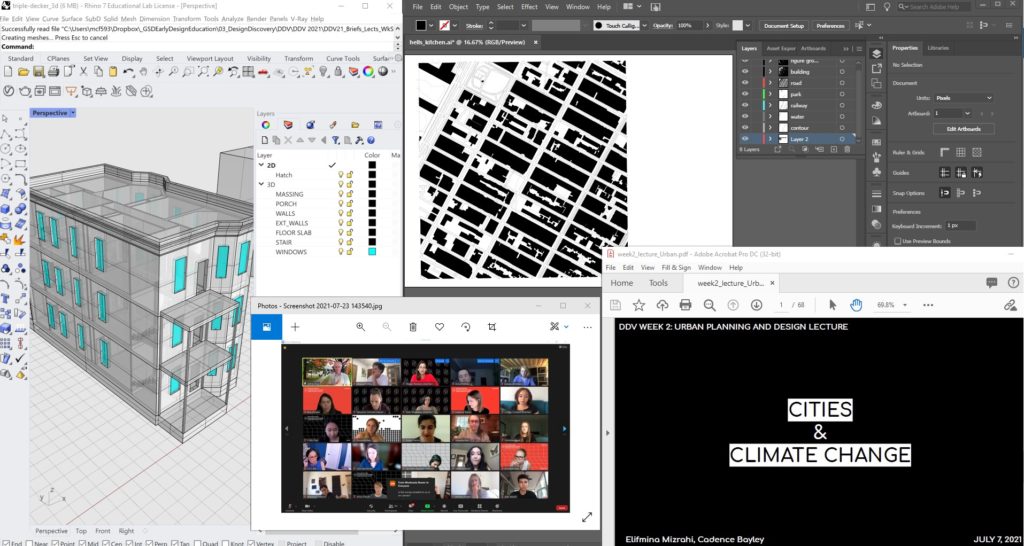
This program is taught remotely and has a hybrid format inspired by both seminar and studio teaching by Harvard Graduate School of Design (GSD) faculty and advanced masters and doctoral students of the school. In addition to providing design exercises, Design Discovery Virtual will have lectures and discussions that tie the design fields to larger social concerns and to the roles they play in making a resilient, just, and beautiful world. Synchronous discussions and group work are combined with asynchronous content to accommodate time zones outside of the East Coast United States. A participant-to-instructor ratio of no more than 10:1 highlights the collegial and collaborative nature of the program as a true reflection of the act of design, more generally.
Three weekly themes structure the curriculum, and one day each week is dedicated to examining the current theme through the three lenses of Urban Planning + Design, Landscape Architecture, and Architecture. The remaining days are filled with workshops and tutorials, office hours, desk crits, and presentations that focus on design production and its methods. In the last week of the program, participants have the opportunity to create and refine a draft portfolio of their produced design work.
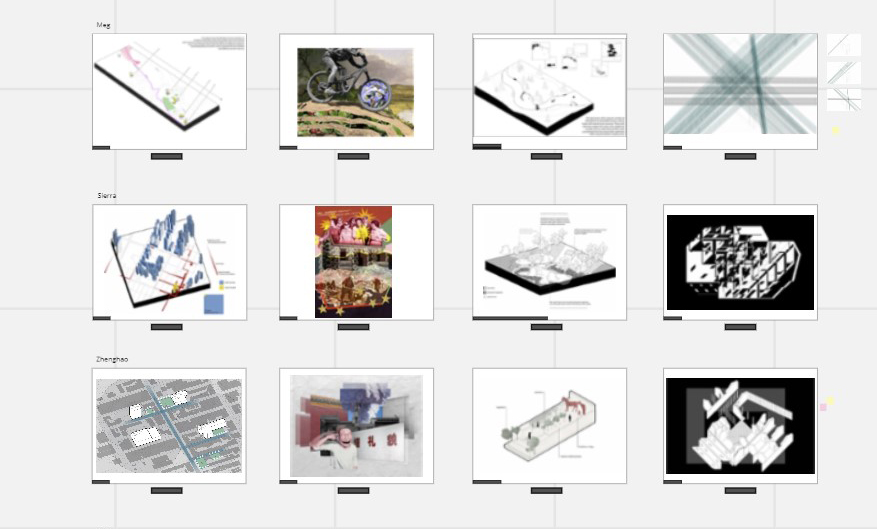
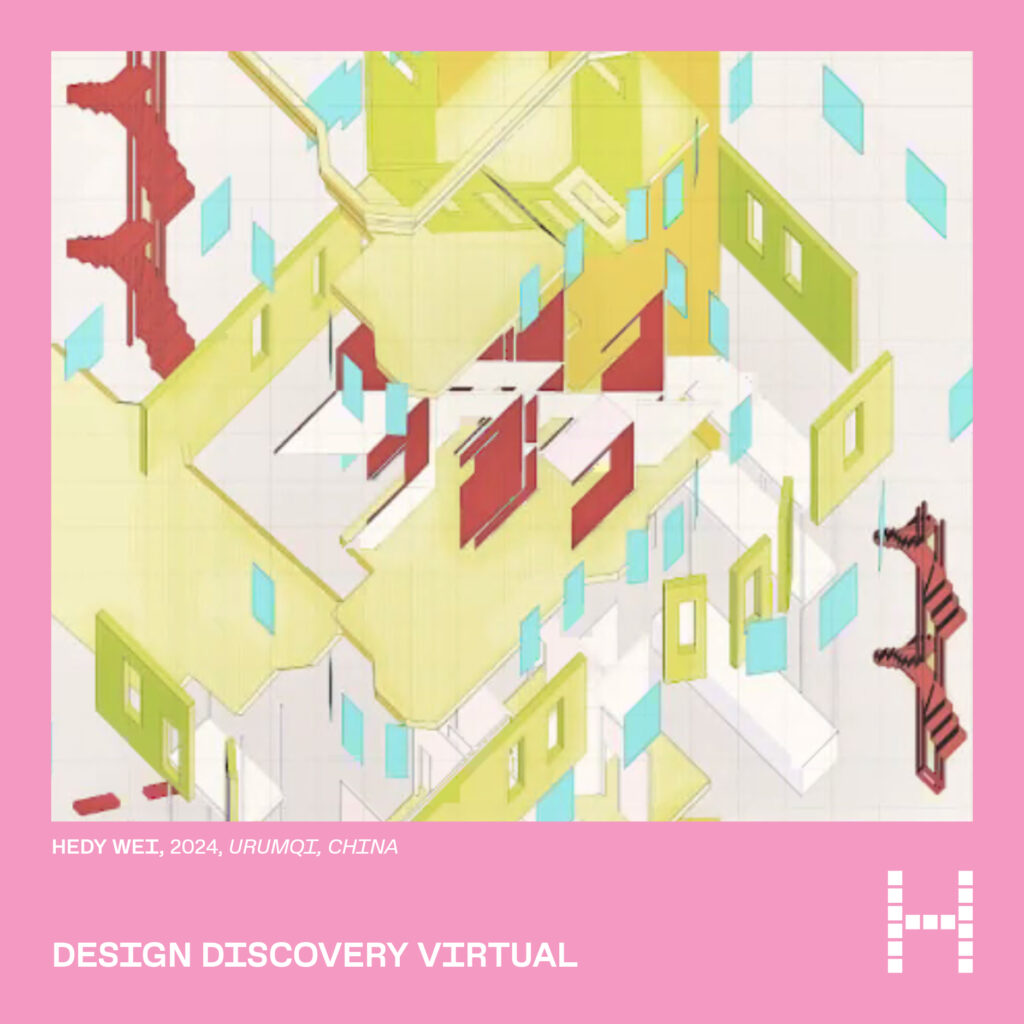
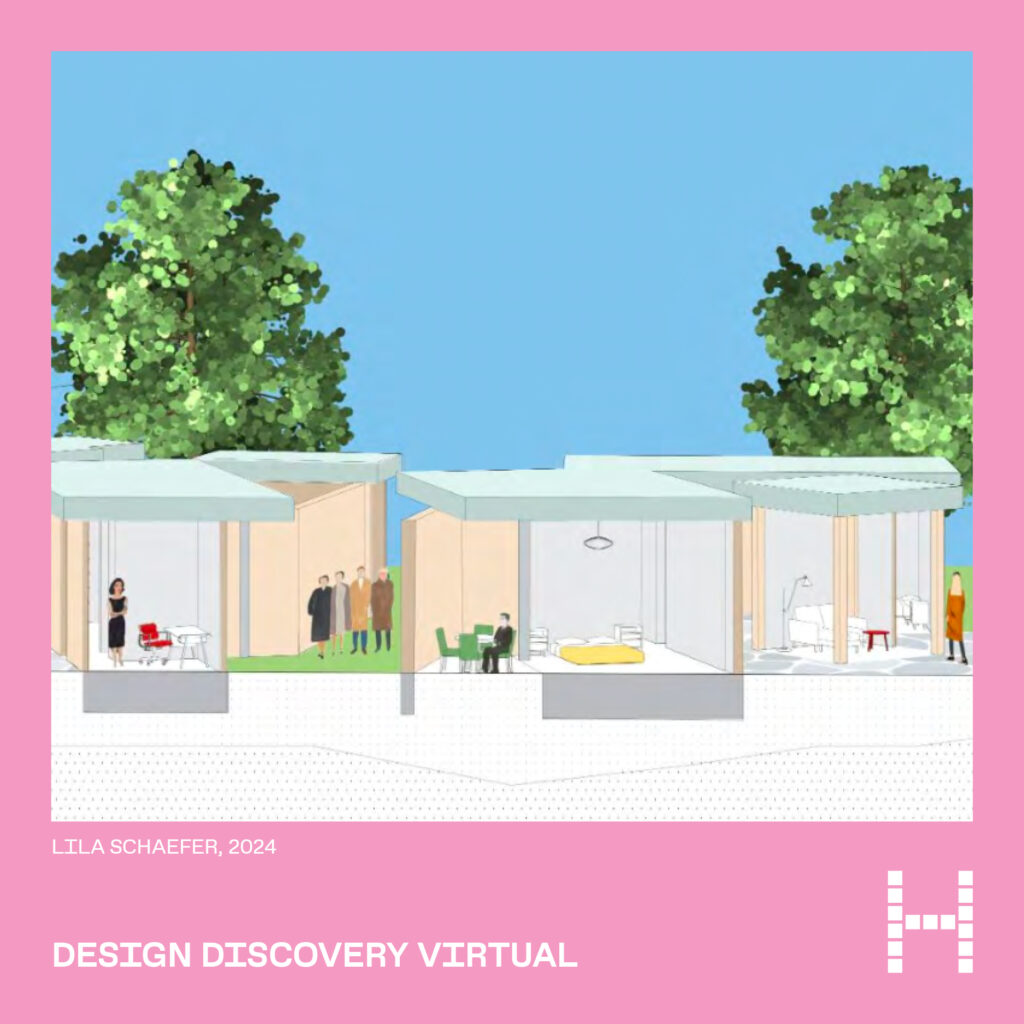
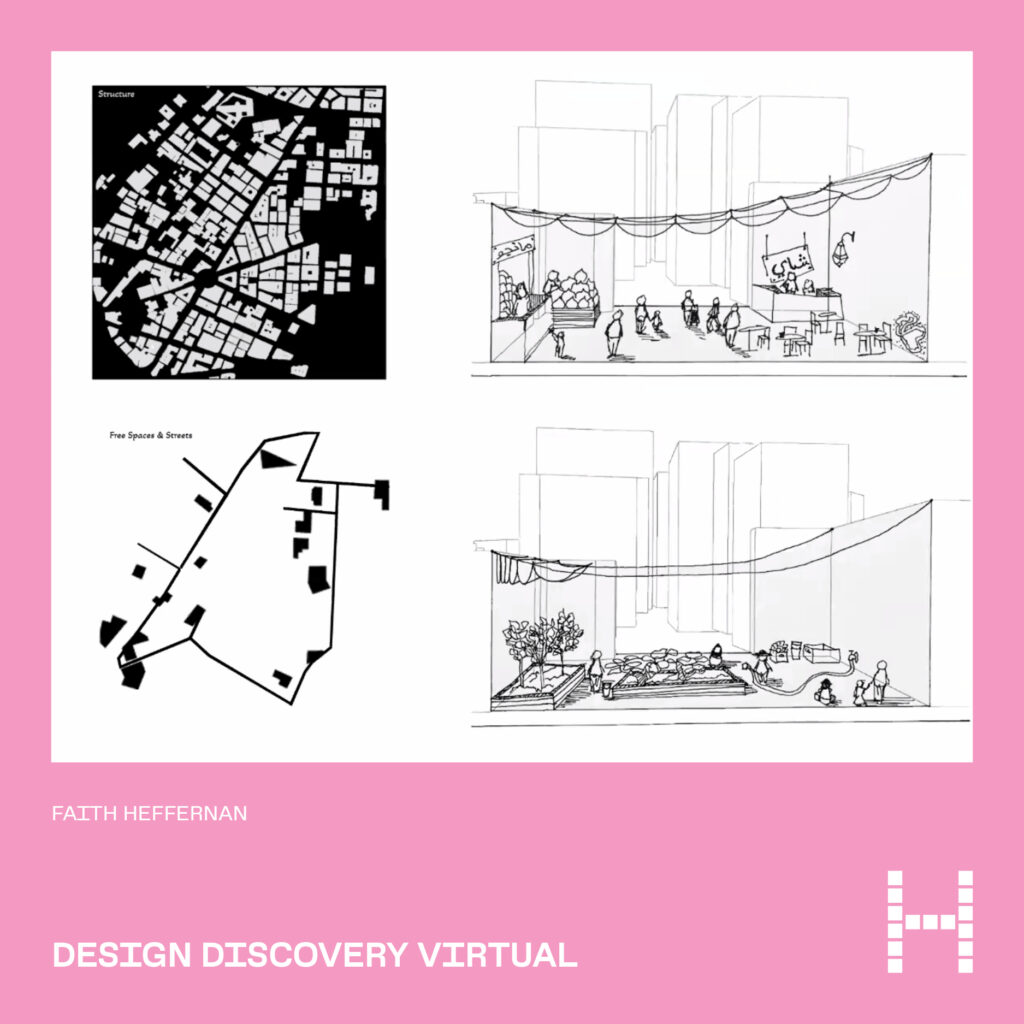
To see more examples of student design work and the life of this program, follow us @designdiscoveryharvardgsd on Instagram.
Schedule
Program Time Commitments
| What? | When? | How much? | Description |
|---|---|---|---|
| Flexible synchronous meetings | Weekdays | 3 hr/day | Studio, seminar, and workshops |
| Flexible synchronous meeting | Weekdays | 1 hr/day | Small group meetings with instructor and peers |
| Asynchronous content | Based on individual availability | 1 hr/day | Prerecorded lectures and tutorials |
| Preparation time | Based on individual availability | 4 hr/day | Independent design thinking and making |
| Total time | 55 hr/week |
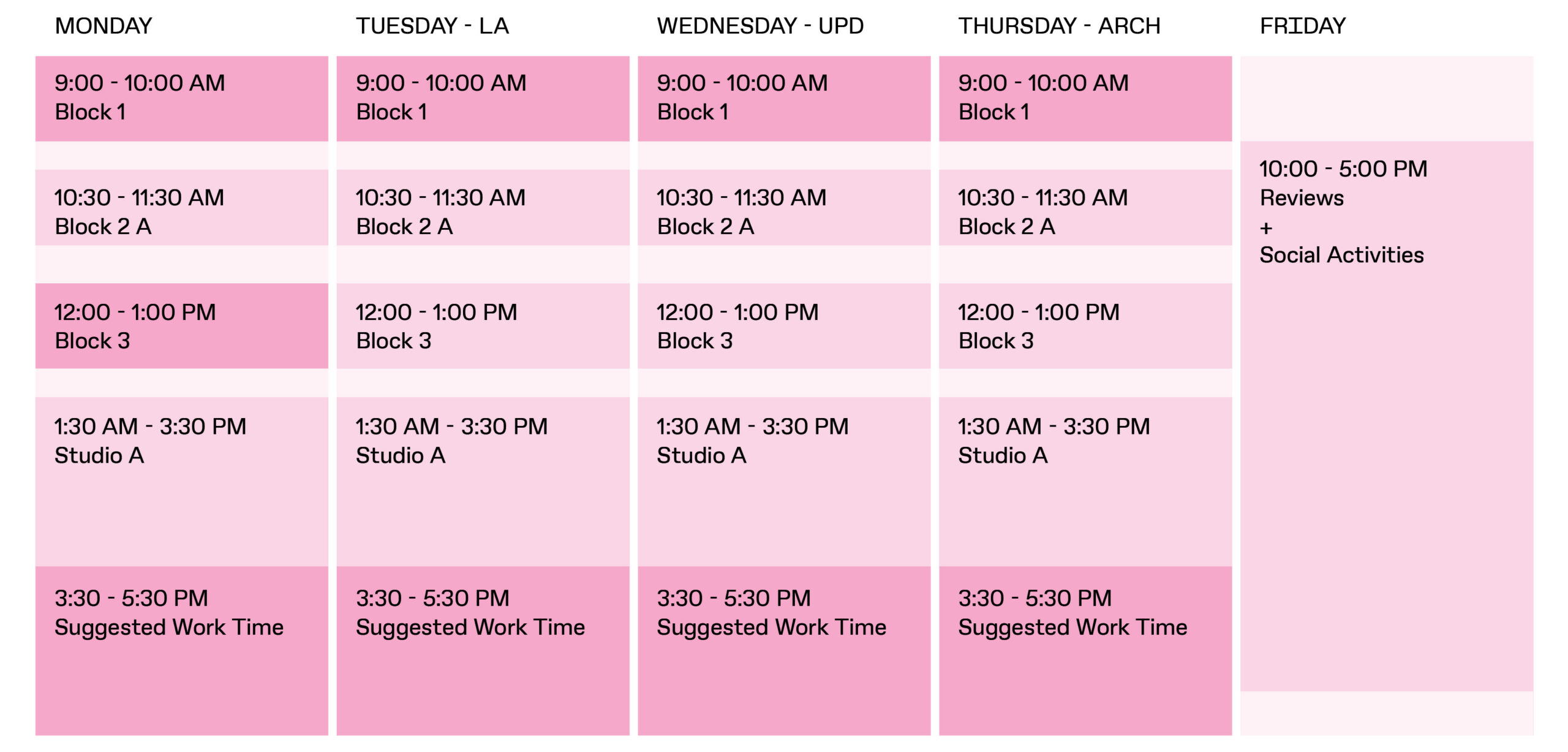
Design Discovery Virtual runs on one schedule in U.S. Eastern Time (ET) and consists of both synchronous and asynchronous content. Synchronous blocks are taught live on Zoom and include tutorials, exercises, and studio work. Participants are required to attend synchronous sessions at the scheduled time, and asynchronous content–pre-recorded lectures and tutorials–is available on demand. Program participation includes the time it takes to prepare readings, assignments and work on design projects outside of live instruction. Participants are free to complete asynchronous content when it best suits individuals, but we recommend that participants set and follow their own schedule.
Please note that Design Discovery Virtual is a full-time commitment. Many participants choose to spend more time than is outlined in order to make full use of the program’s offerings.
Sample Schedule
The sample schedule below maps out DDV’s live, synchronous meeting sessions in light pink, and asynchronous sessions in dark pink. The schedule includes suggestions for how participants can schedule independent work throughout the program.
You may choose to spend more time than is indicated, however, it is not unusual for students taking studio-based courses to spend more time on projects than indicated on this schedule. The time commitment for each project will depend on many factors including (but not limited to) the specific skills you would like to improve and the program content you are most interested in.
design kit + learning tools
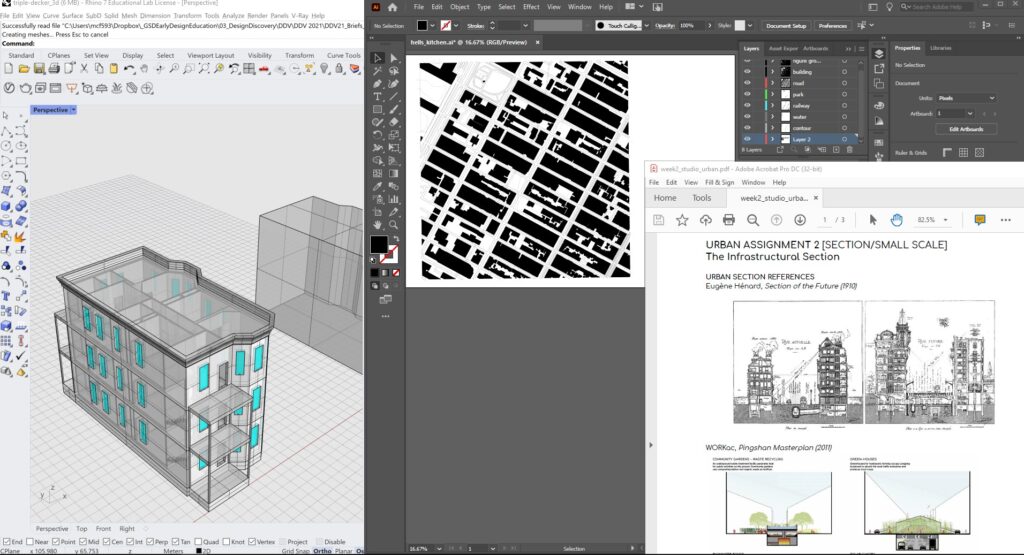
We’ve crafted our virtual program to help build community and peer-to-peer learning through the design tools we use. Design Discovery Virtual participants will receive licensed access to 3D modeling and digital design software programs for the duration of the program included with their tuition. Workshops for the use of these digital design programs will be provided in coordination with design exercises. Additionally, each Design Discovery Virtual participant will have a design kit mailed to their home address, including tools and materials to supplement the digital design work occurring on the computer. All of these materials are included in the cost of program tuition.
Evaluation + Certificate
Successful Design Discovery participants receive a Harvard GSD Design Certificate, a written evaluation from their instructor, and a draft portfolio of their own design work.
tuition + financial aid
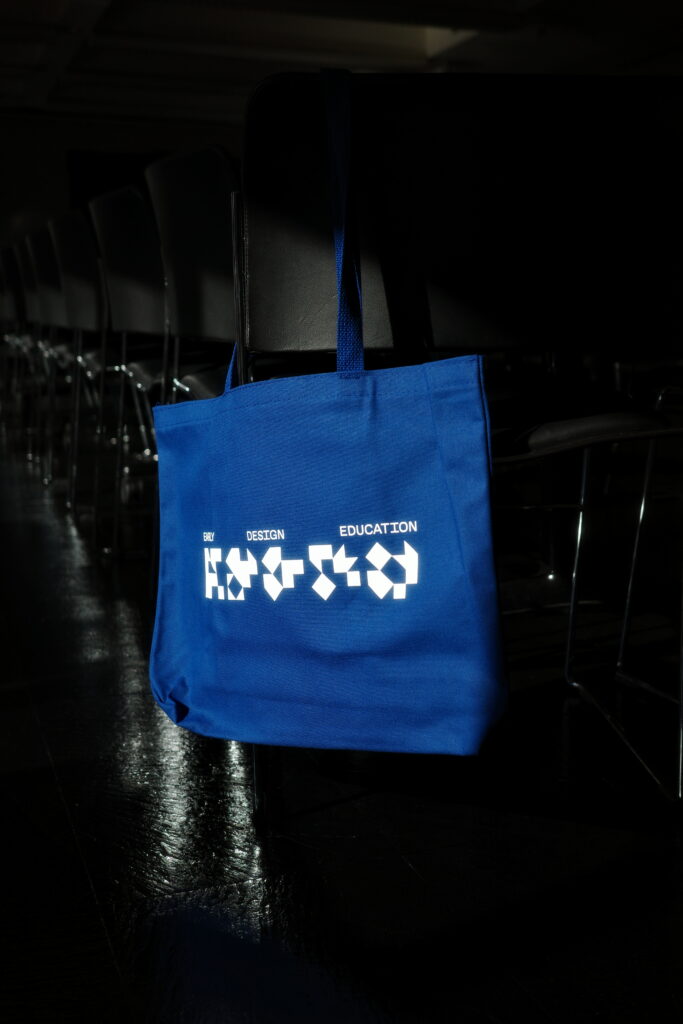
Tuition for the Design Discovery Virtual Program is $2,800. This includes access to the Adobe software suite, Rhino 3D modeling software, a program design supply kit, an exclusive Harvard GSD Early Design Education canvas tote, and other program swag. Program participants may also want to purchase additional materials and supplies for projects throughout the course of the program at their own discretion.
Payment Policy
A nonrefundable application fee of $85 must be paid in full for each application before the application deadline in order to be considered for admission.
Financial Assistance
Financial aid takes into account many factors. We aim to aid applicants who identify the greatest need for assistance to join our program.
To apply, please submit a Financial Aid Application Form along with the required documentation by the program application deadline. Please see the application for more information. This form will be available to complete within your program application.
Please Note: Design Discovery Virtual financial aid is not federally subsidized and is available to U.S. citizens and permanent residents only. International students are not eligible to apply. Requests for aid will not be considered without a completed program application. Late applications will not be considered.
Tuition and Financial Aid FAQ
Faculty + Staff
Coordinating Faculty
Architecture
Urban Planning + Design
Landscape Architecture
Program Director
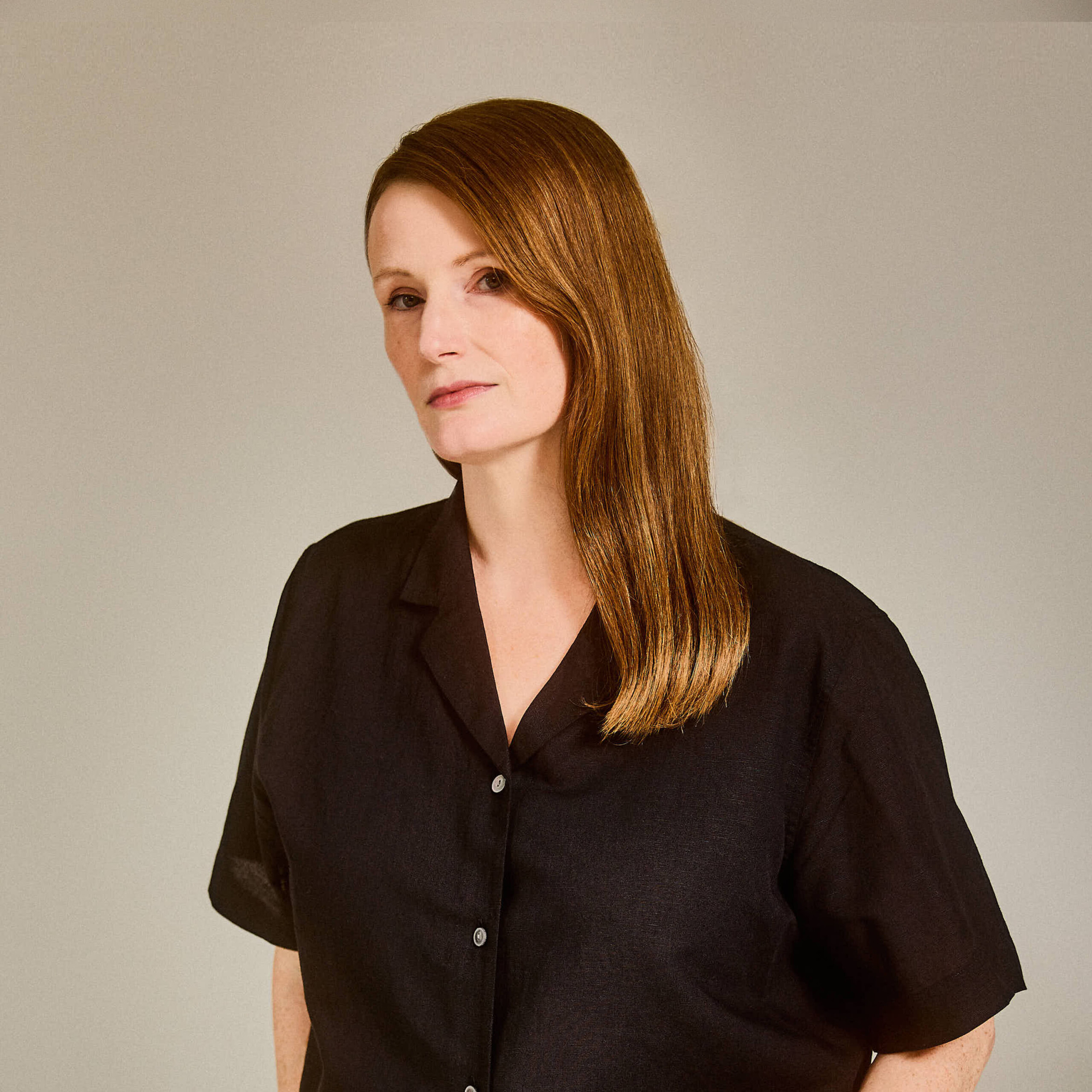



Megan Panzano
Lecturer in ArchitectureExecutive Director of Early Design, Online, and Executive EducationView ProfileSection Instructors
Design Discovery Virtual sections are taught by graduating or advanced GSD students who have a concentration in the field they are teaching. Sections have a maximum of ten students per instructor. Each section is coordinated by current GSD faculty.
Lecturers
Design Discovery invites exceptional professionals and academics to give lectures and join career panel discussions on design, history, theory, office practice, and other aspects of each profession. Speakers are often available for informal conversations afterward.
Past speakers have included:
- J Jih of studio J.Jih
- Alex Anmahian, Principal of Anmahian Winton Architects
- Maurice Cox, director of planning and development for the city of Detroit
- Gary Hilderbrand; partner at Reed Hilderbrand Landscape Architecture
- D’Wayne Edwards, footwear designer and founder Pensole Footwear Design Academy
- Seth Gordon, Film Director and Producer
- Alex Krieger, professor in Practice of Urban Planning and Design at Harvard Graduate School of Design
- Christian Long: Design Share
- Kathryn Madden, Critic in Urban Planning and Design at Harvard University Graduate School of Design; Principal of Madden Planning Group
- Thomas Lyons Mills, Professor of Foundation Studies at the Rhode Island School of Design
- David Saladik: MASS Design Group
- Kirk A. Sykes, Senior Vice President and President of Urban Strategy America Fund
- Maryann Thompson, Adjunct Professor at Harvard University Graduate School of Design; Founder of Maryann Thompson Architects
- Charles Waldheim, John E. Irving Professor of Landscape Architecture and Chair of the Department of Landscape Architecture at Harvard University Graduate School of Design
Panel discussions have included:
Design and Planning Practices, Career Options, Public Process and Design , Design Research, and Preparing a Portfolio.
Apply
To apply for the Design Discovery Virtual program, please submit the following required materials with your online application:
- Application Fee: A non-refundable $85 application fee is due upon application submission.
- Statement of Intent Please tell us (in 250 words or less) what you hope to achieve by attending this design program.
- Resume or CV (PDF) which includes the following information: employment; education; extra-curricular collegiate and community activities (note whether an office held was elected or appointed); honors; awards; professional registration; professional societies; publications; avocations; hobbies; travel. If you served in the military, indicate rank on entry and rank on separation.
- Academic History
- University Transcripts (upload scanned copy, does not need to be official) Transcripts should be submitted with the program application from all colleges and universities from which the applicant has received credit. When uploading a transcript, please make sure the scanned version is legible. Transcripts that are not in English must be accompanied by a certified English translation. If the university or college does not issue transcripts, a certified letter and certified English translation must be provided. It should list courses and examinations taken, grades, and degrees and dates of degrees received. Admitted students who have attended a school outside of the U.S. may be asked to submit a WES (World Education Service) certified transcript, at the applicant’s expense.
- Upload .jpg, .tiff, or PDF image files of your original design work or photography (optional)
- Financial Aid Application (optional, U.S. applicants only)
- International applicants, except those from countries where English is the native language, must submit ONE of the following (U.S. citizen and dual citizen applicants do not fall into these requirements):
- Duolingo test
The minimum required score is 115. - A valid score from the TOEFL internet-based test
The minimum required TOEFL iBT total score is 92, with the following minimum section requirements: reading, 23; speaking, 23; listening, 23; writing, 23. Please have test results submitted to the Harvard Graduate School of Design, institution code 3455. For further information about the TOEFL exam, please visit www.ets.org/toefl.International applicants who are currently enrolled in a university within the United States are exempt from this requirement.
- Duolingo test
* In order to comply with applicable US sanctions and export control regulations, Harvard prohibits access to and use of its educational offerings, programs and resources by (i) individuals located in or ordinarily resident in comprehensively sanctioned regions, and (ii) individuals who are otherwise subject to US government sanctions, unless the activity is authorized by a general or specific license or is otherwise exempt from sanctions regulations. Harvard may decline, suspend, or terminate an application, enrollment, or access to course materials as necessary to comply with these requirements.
Application Deadlines
Applications and application fees are due by the program application deadline, April 19, 2027. Early completion of the application and application fee are encouraged! Please see below for the detailed deadlines for the upcoming program cycle.
The Design Discovery Virtual 2027 program will run from June 7 – June 25.
| Design Discovery Virtual Deadline | Date |
|---|---|
| Online Application Opens | January 2027 |
| Application Deadline (including Financial Aid Applications) | April 19, 2027 |
| Admission + Aid Decisions Sent to Applicants | April 26, 2027 |
| Registration/Tuition Payment Deadline | April 30, 2027 |
| Cancellation Deadline for Full (100%) Refund* | May 31, 2027 |
| Withdrawal Deadline for Partial Refund* | June 11, 2027 |
*You may cancel or withdraw from the program by emailing [email protected].
Frequently Asked Questions
Do you want to be kept informed about the Harvard GSD’s Design Discovery programs? Please join our newsletter here to get the latest updates!
Follow Harvard GSD’s Design Discovery of Instagram, Facebook and LinkedIn for more information!